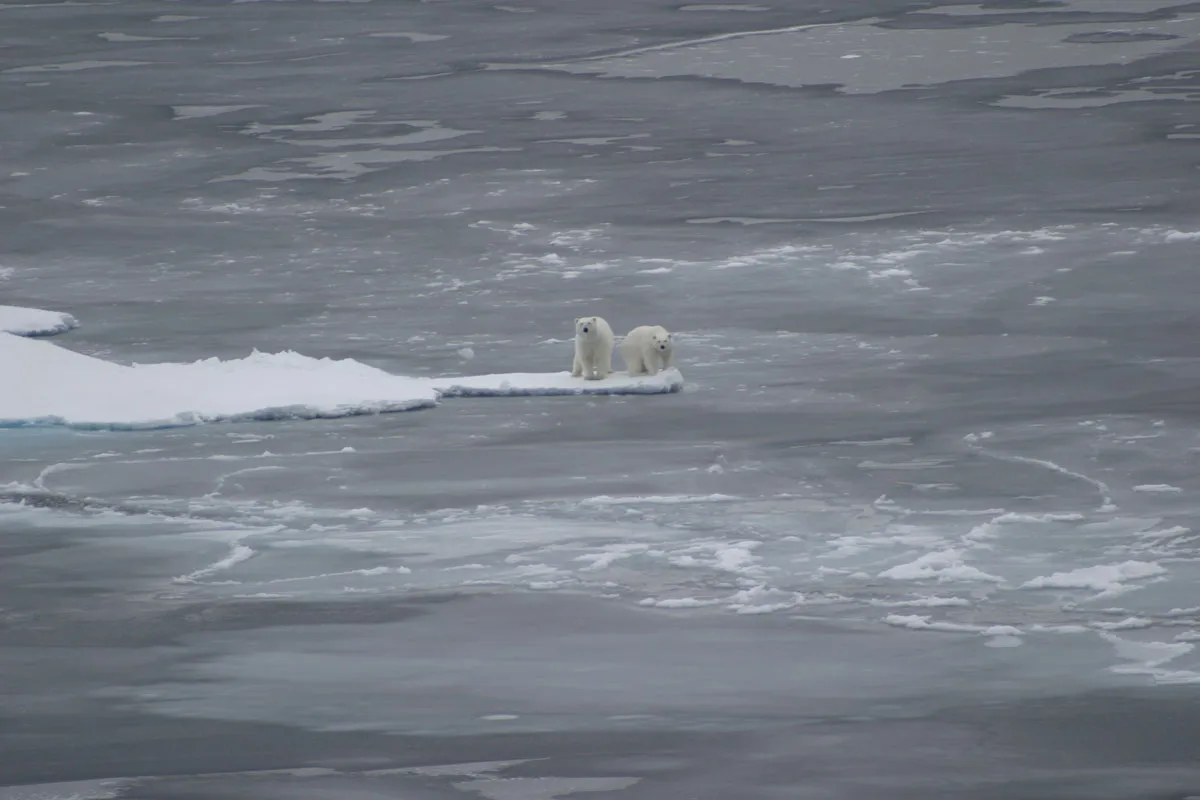
NEW YORK — Arctic sea-ice extent shrank to an unprecedented low this summer, part of a long-term decline in the icy white cap over the far northern ocean.
Researchers predict that nearly ice-free summers are on the way, although it’s not yet clear when this will happen. This shift has implications for climate — in particular, it is expected to aggravate global warming — and for the animals, such as polar bears and walruses, which depend on the ice for habitat.
But the loss of ice over the Arctic Ocean also opens up the possibility for increased shipping, tourism, oil and gas exploration, and fishing. But this potential development raises challenges with which nations will have to grapple, said Anne Siders, a postdoctoral researcher with the Columbia Center for Climate Change Law, to an audience at Columbia University Wednesday (Sept. 19).
Latest Videos From
Siders was among a panel of researchers who discussed the science behind the declining sea ice, the suite of changes occurring in the Arctic and public perception of it. [10 Things You Need to Know About Arctic Sea Ice]
A predictably open Arctic Ocean creates opportunities and challenges for nations that ring the Arctic. Here are some of them.
The opportunities:
Fishing: Warming ocean temperatures, migrating fish and changes in sea ice may create conditions favorable to the development of new commercial fisheries within the Arctic, according to the U.S. National Oceanographic and Atmospheric Administration (NOAA). A U.S. plan, approved in 2009, temporarily prohibits commercial fishing in U.S. Arctic waters until more information is available.
More ship traffic: A journey through the Northwest Passage north of Canada or along the Northern sea route over Russia can cut thousands of miles off a trip that could otherwise require a ship to travel through the Panama Canal or the Suez Canal. Between 1906 and 2006, only 69 ships traveled through the Northwest Passage, said Michael Byers, professor of political science at the University of British Columbia, in a recent article in the Canadian newspaper The Globe and Mail. In 2010, 18 traveled through, and in 2011, 22 made the trip. As ice in the passage has dwindled, tourist trips on cruise ships and private yachts has increased, the Canadian Broadcasting Corporation reports.
Gas and oil: The U.S. Geological Survey (USGS) estimated in 2008 that the Arctic holds a wealth of undiscovered energy reserves: 90 billion of barrels of oil, 1,670 trillion cubic feet (47.3 trillion cubic meters) of natural gas, and 44 billion barrels of natural gas liquids —most of it offshore. The quest for these resources is underway, in spite of setbacks. The oil company Shell announced on Monday(Sept. 17) it was delaying until next year plans to drill off the Alaskan Arctic coast. The loss of ice would make this prospecting easier.
The problems:
Inadequate maps: The increase in traffic brings up a navigation problem. NOAA's maps and other navigational information are unavailable or outdated in parts of the Arctic Ocean, because thick, impenetrable sea ice kept ships out. In addition, most Arctic waters that are charted were surveyed using obsolete technology dating back to the 1800s, according to NOAA.
Little infrastructure or support: Alaska has twice the length of coastline as the lower 48 states, but the U.S. Coast Guard has extremely limited resources to devote to search-and-rescue operations or to oil spill cleanup, Siders said. Admiral Robert Papp, the Coast Guard commandant, has been quoted in the media as saying, "The Coast Guard has zero capability in the Arctic. … If we are going to have a permanent presence there, it's going to require some investment. We don't have the infrastructure in place right now." As an example of when things go wrong: In 2010, a cruise ship called the MV Clipper Adventurer ran aground in the Northwest Passage, and its passengers had to be rescued by the Canadian Coast Guard. [Disasters at Sea: 6 Deadliest Shipwrecks]
Territorial disagreements: The Arctic coastal nations, the United States, Canada, Russia, Norway and Denmark (Greenland is a Danish territory) are seeking to lay claim to territory far out over the continental shelves, but the United States can't lay its own claim and has little say in others’ because the U.S. is not a party to the U.N. Law of the Sea Treaty, CNN Money reports. There are other territorial issues as well, for instance, Canada maintains that the Northwest Passage is sovereign Canadian territory, while other nations, including the U.S., maintain that it is an international strait.
The loss of summer ice will not, however, transform the Arctic into the Caribbean.
“Some of the challenges to operating in the Arctic are and have been the same for a very long time,” Siders said, adding these will remain at least to some degree, requiring people to work “in the dark, in the cold, in the middle of a storm,” as earlier arrivals have done before.
Follow LiveScience on Twitter @livescience. We're also on Facebook & Google+.