














Cool Photo: A Glistening School of Sardines

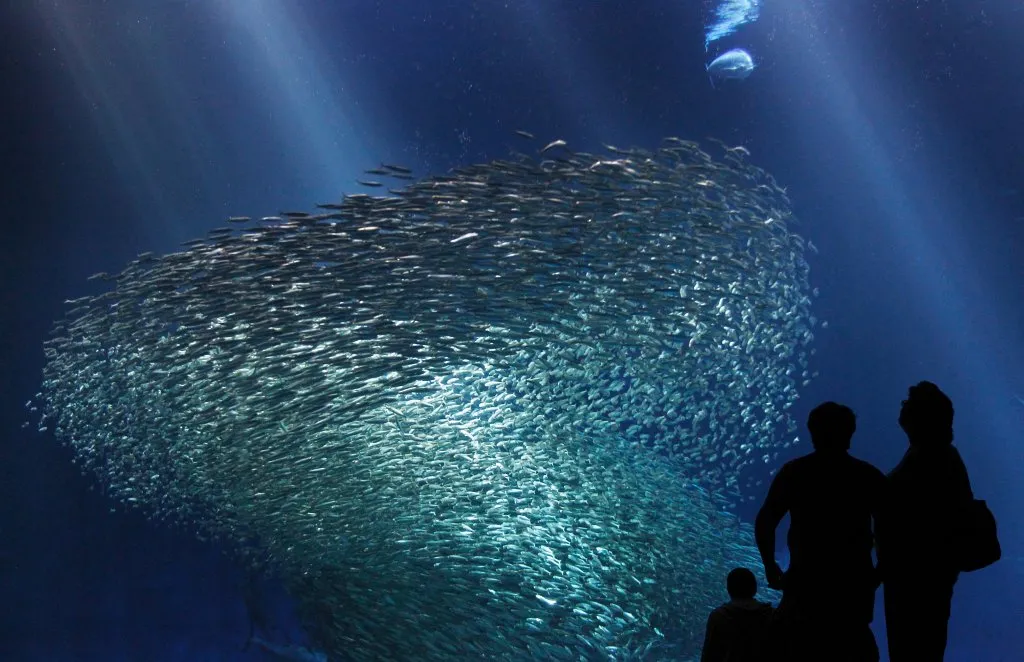
Hovden Cannery in Monterey, Calif., once took Pacific sardines by the thousands and put the silvery fish into tins to be eaten. But the cannery is long gone, and (live) sardines serve a different purpose at the Monterey Bay Aquarium, where the cannery once stood: amazing curious visitors.
This photograph shows a large school of sardines in the aquarium's "Open Sea" exhibit. Sardines school to avoid predators, said curator Paul Clarkson. "It's a safety-in-numbers gambit," he told OurAmazingPlanet. "This makes it harder for a predator to target any single individual."
This classic schooling behavior is seen in a wide variety of fish. But exactly how so many individuals can move as one remains mysterious. It is thought to involve ultra-quick collective processing of visual cues in the environment, likely aided by the fish's lateral line organs, which sense water currents and pressure.
The presence of predators like mahi-mahi, bluefin tuna and hammerhead sharks in the same exhibit keep the fish from getting complacent, Clarkson said. (Sardines will school even without predators present, just not in tight formations like this one.) Generally, however, there isn't much predation going on, since the predators are kept well-fed, he said.
Sardines were heavily fished in the first half of the 20th century, according to the aquarium, and overfishing led their populations to collapse. The fish has recovered somewhat since the 1980s, though, and there is now a modest sardine fishery off the California coast.
Reach Douglas Main at dmain@techmedianetwork.com. Follow him on Twitter @Douglas_Main. Follow OurAmazingPlanet on Twitter @OAPlanet. We're also on Facebook and Google+.
Get the world’s most fascinating discoveries delivered straight to your inbox.
