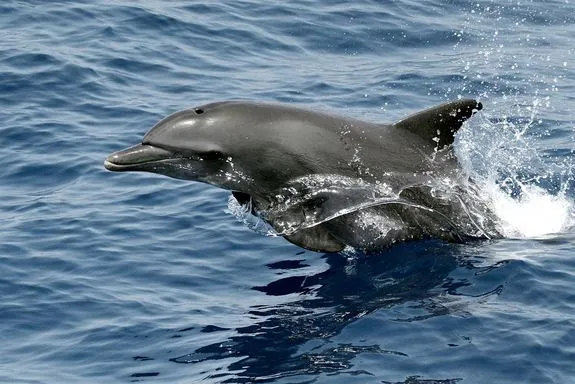
Sickly, underweight bottlenose dolphins living and dying in the northern Gulf of Mexico may be the result of exposure to oil that gushed into the water after the Deepwater Horizon oil rig explosion.
The oil disaster occurred April 20, 2010, when the Macando oil well blew out. During the three months it took to contain the leak emanating from the broken riser pipe at the well, about 4.9 million barrels of oil — or about 205 million gallons — gushed into the Gulf of Mexico, according to government estimates.
Barataria Bay in the Gulf was particularly affected by the oil for a prolonged period, the researchers noted. So to get a bead on dolphin health, they conducted comprehensive physicals of 32 live dolphins in Barataria Bay during the summer of 2011. They found that many of these dolphins were underweight, anemic, had low blood sugar and/or some symptoms of liver and lung disease. In addition, nearly 50 percent showed abnormally low levels of hormones known to help with the body's response to stress, metabolism and immune function.
Latest Videos From
Specifically, the team saw low levels of the stress hormones cortisol and aldosterone, which are released by the adrenal glands.
"From studies of other mammals we know that adrenal insufficiency can lead to some fairly severe health problems; it can cause low blood sugar, weight loss, low blood pressure and eventually even lead to kidney and heart failure and death," Lori Schwacke of National Oceanic and Atmospheric Administration said during a news briefing. "So we're concerned that many of the Barataria dolphins are in such poor health that they're likely not to survive."
In fact, one of the dolphins examined was later found dead and emaciated in January on Grand Isle. These same health problems were not seen in Sarasota Bay in Florida, an area not exposed to oil from the spill.
Since February 2010, more than 675 dolphins have stranded in the northern Gulf of Mexico, which includes areas from Franklin County, Fla., to the Louisiana/Texas border. NOAA says that area usually averages about 74 stranded dolphins per year.
Because of the abnormally high number, NOAA declared an "unusual mortality event" and is investigating the causes of the dolphin deaths. While most of the stranded dolphins have been dead when found, 33 have stranded on beaches alive and seven have been taken to facilities for rehabilitation.
NOAA scientists expect to see newborn, fetal and stillborn dolphins strand during the spring; and while they did see strandings in these age groups during 2010 and 2011, all age groups have continued to strand at high levels, they said. [World's Cutest Baby Wild Animals]
As for how the oil entered the dolphins' bodies, NOAA points to several mechanisms: inhaling vapors at the water's surface; ingesting oil from the sediment or water while feeding; eating whole fish, whose organs and fluids can harbor contaminants; and absorption through their skin.
NOAA scientists are currently working with a team of marine mammal health experts to investigate the causes of such high dolphin mortality.
Follow Live Science for the latest in science news and discoveries on Twitter @livescience and on Facebook.