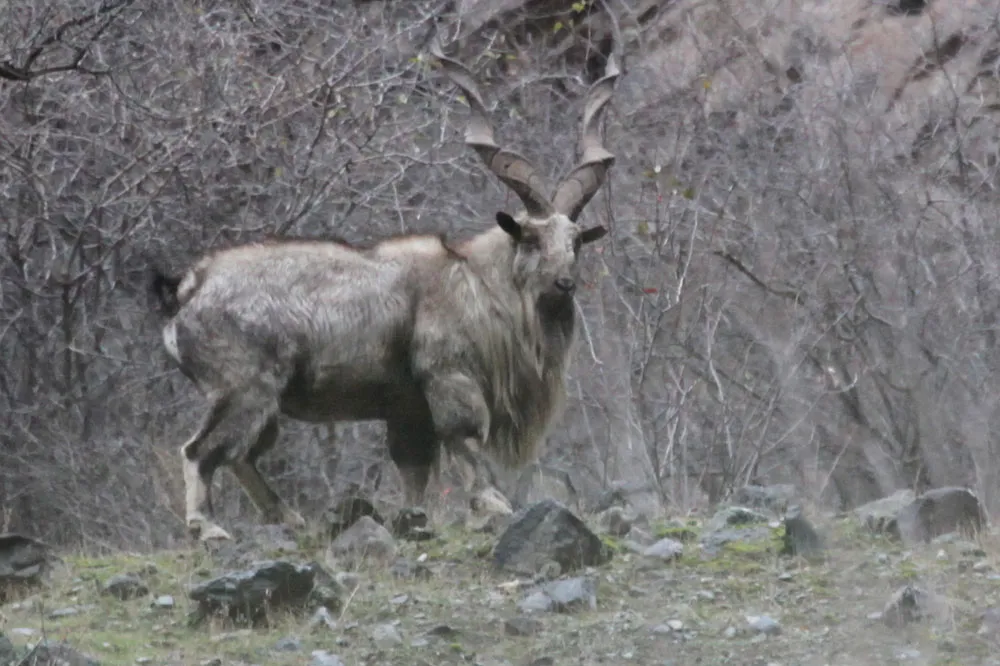
A pneumonia outbreak has wiped out as many as 20 percent of the rare wild goats in Tajikistan, Central Asia, researchers say.
Working together, researchers from Central Asia, France and the Wildlife Conservation Society determined that a pneumonia outbreak that occurred in Tajikistan during September and October 2010 may have killed at least 65 markhors (Capra falconeri).
That may not seem like all that many goats, but fewer than 2,500 of the endangered goats currently exist worldwide, according to the U.S. Fish and Wildlife Service.
Latest Videos From
Markhor goats are known for their distinctive corkscrew horns, which can grow to lengths of nearly 5 feet (1.5 meters). Despite the goats' large size, their amazing climbing ability enables them to scale cliffs and even climb trees while searching for plants to feed on.
The researchers think domestic goats may be to blame. Farmers in Tajikistan sometimes raise their goats in habitats that are also used by markhors, and this cohabitation increases the risk of infection transmission from domestic stock to wildlife.
"Recent investigations in the area of the outbreak have revealed that domestic goats test positive for a mycoplasma bacteria that may cause pneumonia in both domestic and wild goats," study researcher Stéphane Ostrowski of the Wildlife Conservation Society said in a statement.
The good news: The loss of markhors as a result of the pneumonia pathogen identified by the researchers appears to have stopped. "So far, no new outbreaks have been reported since 2010," Ostrowski said.
The researchers noted that the pneumonia outbreak among the markhors emphasizes the need for continuous disease surveillance of domestic animals that come into contact with wildlife. The research was supported in part by the German federal agency for international cooperation.
The study was published in the December issue of the journal Emerging Infectious Diseases.
You can follow Live Science writer Remy Melina on Twitter @remymelina. Follow LiveScience for the latest in science news and discoveries on Twitter @livescience and on Facebook.

 Live Science Plus