


-
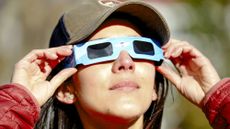 Solar eclipse glasses: Where to buy a safe, certified pair before the August 12 eclipse
You MUST wear protective eyewear to view a partial solar eclipse like the one on August 12. Here's how to find a pair of certified solar eclipse glasses from an approved vendor.
the-sun -
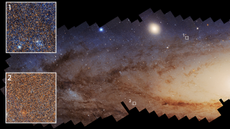 Hubble takes one of the most detailed looks at neighboring Andromeda galaxy ever
Space Photo of the Week The most famous giant spiral galaxy in the universe has been revealed not to be the star factory it once was, just as NASA's Nancy Grace Roman Space Telescope is set to unlock even more breathtaking cosmic insights.
Space Photo of the Week -
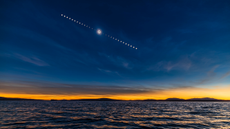 Why Aug. 12 could be the greatest single day and night for skywatchers for years
A solar eclipse, the peak of the Perseid meteor shower, Venus at dichotomy and the Milky Way at its annual best will create one of 2026's best days for skywatching.
2 Commentsthe-sun -
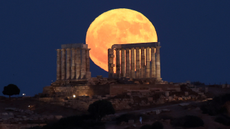 Catch an orange 'Buck Moon' rise tonight before a month of solar and lunar eclipses
July's full moon will be at its best on the night of July 29. It's the last regular full moon before a total solar eclipse and partial lunar eclipse in August.
the-moon -
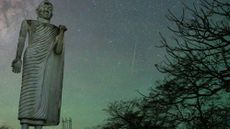 2 meteor showers peak on the same night this week — when to get the best views
The Delta Aquariids peak on July 30-31, kicking off "meteor season," though bright moonlight will likely limit views.
meteoroids -
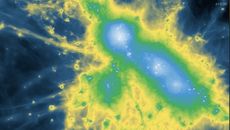 Scientists discover chunk of the universe's missing matter hiding between galaxies
The total amount of ordinary matter in our universe adds up to roughly one-tenth of what's expected. Now, scientists think they may have found some of it between galaxies.
3 Commentsastronomy -
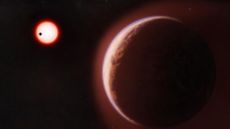 'It's absolutely exciting!': Astronomers discover atmosphere around an Earth-like planet in the habitable zone for first time
Astronomers have detected helium escaping from the super-Earth LHS 1140 b, providing the strongest evidence yet that a rocky planet in another star's habitable zone has retained an atmosphere for billions of years.
3 Commentsexoplanets -
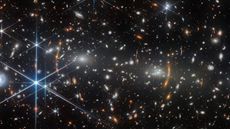 James Webb telescope uses trippy Einstein prediction to probe the farthest reaches of the universe
Space photo of the week The James Webb telescope peers through a warped bubble of space-time to study galaxies from the first billion years after the Big Bang.
2 CommentsSpace photo of the week -
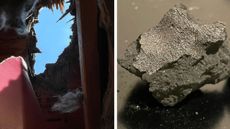 'Fireball' meteorite that smashed into New Jersey home contains ingredients of life from ancient proto-planet
Amino acids and other "pre-biotic" molecules were spotted in a meteorite that crashed into a New Jersey home in 2024.
meteoroids


