

-
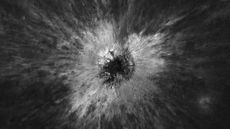 'Once every 130 years': A huge new crater on the moon could be a giant leap for lunar science, researcher says
Interview Scientists using NASA's Lunar Reconnaissance Orbiter (LRO) have discovered McGetchin crater, a giant new impact structure measuring more than 700 feet wide. LRO investigator Julie Stopar explains what the discovery could mean for humanity's future on the moon.
Interview -
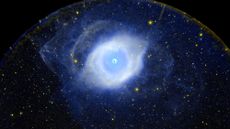 Vera C. Rubin Observatory detects one of the smallest and faintest satellite galaxies ever seen
Astronomers looking at Vera C. Rubin Observatory test data have discovered 'Aquarius IV', believed to be a brand new satellite galaxy of the Milky Way located 350,000 light-years away.
astronomy -
 What are you most excited for NASA's Roman Space Telescope to find?
Poll NASA's Nancy Grace Roman Space Telescope has taken its first pictures of space as it heads toward its orbital location. From there, it will begin scanning deep space to uncover more about our universe.
3 CommentsPoll -
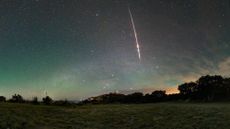 Southern Taurid meteor shower begins — how to spot blazing 'fireballs' from now till November
The Southern Taurid meteor shower, one of the longest-running meteor showers of the year, is on from now until late November. Here are the two peak nights to watch for.
meteoroids -
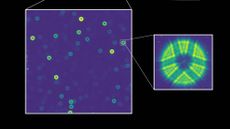 'On our way to groundbreaking science': Stars turn neon-green in first test image from NASA's Roman telescope
Space photo of the week This week, NASA turned on the Nancy Grace Roman Space Telescope's powerful 300-megapixel camera for the first time. The debut test image promises "groundbreaking science" to come with NASA already talking about doubling the mission's lifespan.
2 CommentsSpace photo of the week -
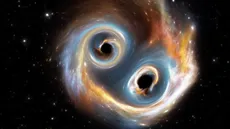 An 'impossible' black hole merger may finally be solved — but it raises an even bigger mystery
New research suggests that a perplexing signal created by a pair of colliding black holes may have been warped by a space-time phenomenon known as gravitational lensing. This theory could finally explain the "impossible" size of the merging singularities, but it also poses a new problem.
2 Commentsastronomy -
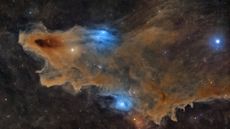 Space 'shark' takes top prize at ZWO Astronomy Photographer of the Year contest
A Royal Observatory Greenwich contest showcased work from around the night sky and the solar system, with prize-winning photos spanning topics ranging from auroras to planets.
astronomy -
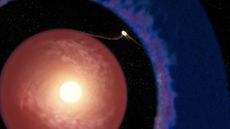 Giant 'baby' planet is the youngest world scientists have ever seen
Astronomers have confirmed a large exoplanet is forming in the cloud of debris around a young star. At less than a million years old, it's the youngest exoplanet found so far.
exoplanets -
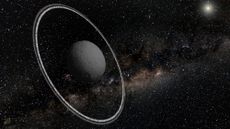 Strange ringed object beyond Saturn looks even stranger in new James Webb telescope study
James Webb Space Telescope observations of Chariklo, one of the smallest ringed worlds in the solar system, reveal some inexplicable changes.
2 Commentsastronomy


