















Nefertiti's tomb close to discovery, famed archaeologist Zahi Hawaas claims in new documentary
Zahi Hawass says he hopes to discover the tomb of Nefertiti before he retires, and he believes he's getting close.


Zahi Hawass, perhaps the world's most famous archaeologist, hopes to discover the tomb of the ancient Egyptian queen Nefertiti before he retires, and he says he may be getting close.
"If I made this discovery, I think I would be happy to end my career with the most important discovery of the most important queen of Egypt — Queen Nefertiti," Zahi Hawass, a former Egyptian antiquities minister, says in "The Man with the Hat," a new documentary about his life and career. The film, directed by Jeffrey Roth, will premiere on multiple streaming platforms Jan. 20.
Nefertiti was the wife of Akhenaten, a pharaoh who reigned from 1353 to 1336 B.C. and unleashed a religious revolution aimed at focusing Egypt's polytheistic religion around the worship of the Aten, the sun disk. At times, Nefertiti was displayed in ways that normally only a pharaoh would be shown, such as smiting an enemy. Some Egyptologists, including Hawass, believe she ruled as a pharaoh for a time after Akhenaten's death, taking on the new name Neferneferuaten.
Hawass and his team have been excavating in Egypt's Valley of the Kings for years. Previously, they found two tombs, known as KV 65 (found in 2006) and KV 66, that had been plundered, likely in antiquity. KV 66 was originally believed to be the room of another tomb, but follow-up work in 2015 determined that it was a separate tomb and it was named KV 66.
While the two tombs don't shed direct light on Nefertiti's tomb they, and the other discoveries made by Hawass' team show that there are still significant discoveries to be found in the Valley of the Kings. They also help map out more of the valley and help determine areas where Nefertiti's tomb is not located.
Now, his team is excavating in the eastern Valley of the Kings, close to the tomb of Hatshepsut, a powerful female pharaoh who ruled between 1479 and 1458 B.C. They hope Nefertiti's tomb will be found there. Hawass says that he doesn't have evidence to support this theory, but has a feeling it could be there.
"There is one area now that we are working in the east valley, near the tomb of Queen Hatshepsut," Hawass told Live Science. I'm hoping that this could be the tomb of Queen Nefertiti." Work is continuing, and "this discovery could happen soon," he said.
Get the world’s most fascinating discoveries delivered straight to your inbox.

Zahi Hawass said he may be getting close to finding the tomb of Nefertiti in the Valley of the Kings.
Repatriation to Egypt
Hawass has been involved in many other excavations and projects that are described in the new documentary. One initiative seeks to have the Rosetta Stone (now in the British Museum), the Dendera Zodiac (now in the Louvre) and the bust of Nefertiti (now in the Neues Museum in Germany) repatriated to Egypt. Hawass told Live Science he believes these three artifacts "are the icon of the Egyptian identity and their home should be the Grand [Egyptian] Museum," which opened in November.
It's "fair [for] these three objects to come back to Egypt because the Europeans, in the last century," took countless artifacts from the Nile region in the 19th and early 20th centuries, he said. These priceless treasures were brought to private households and museums in Europe at a time when Egypt was often controlled or heavily influenced by European powers.

Zahi Hawass at the tomb of the boy king Tutankhamun in the Valley of the Kings.
Controversies
In addition to covering Hawass' life and work, the documentary discusses a few controversies he's been involved in. One of the most serious ones occurred after the 2011 Egyptian revolution that forced out longtime president Hosni Mubarak.
RELATED STORIES
In April 2011, Hawass was sentenced to one year in prison for allegedly failing to uphold a court decision over a shop inside the Egyptian Museum, a decision that was later overturned on appeal. The dispute is complicated: When the museum was being remodeled and a new gift shop was built, the previous shop owner was barred from bidding because of disputes the owner and museum had had in the past. The owner went to court and got a legal order that he be allowed to bid on the new shop. But Hawass refused to implement the court order, saying that the winner of the bid had been decided.
Egyptian officials also investigated Hawass over other complaints. While he couldn't travel outside of Egypt for a time, he was never charged, and in 2013 he was able to travel outside the country again, one of his first stops was the Royal Ontario Museum in Toronto to kick off a lecture tour that aimed to promote tourism in Egypt.
He addressed this and other controversies in the documentary, saying that as he became better known, he found himself being criticized and attacked more frequently. He maintains that he conducted himself with integrity throughout his career.
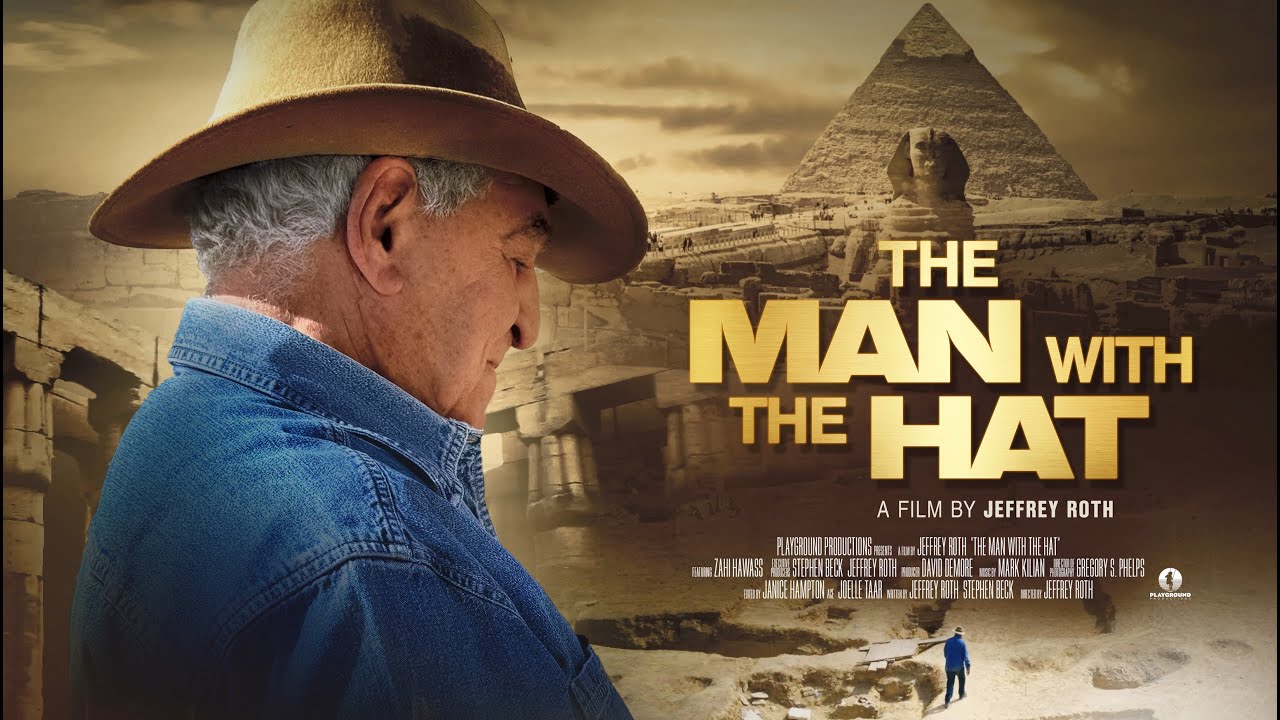
How to watch "The Man with the Hat"
"The Man With The Hat" is streaming on Apple TV and Amazon Prime Video, from Saturday January 19.

Apple TV: 7-day free trial
Home to some huge shows and blockbuster movies, Apple TV plans start from $12.99 / £9.99 per month. You can try it for free with a seven-day free trial.

"The Man with the Hat" is available to purchase through Amazon Prime Video in the US from $9.99, or $12.99 for high-definition. It is not available to UK users.

Watch from anywhere with NordVPN
A VPN won't only keep you safe online – it will also bypass geo-restrictions to unblock your usual streaming services, wherever you are in the world.
🥇 World's best VPN service
✅ Fast, secure, huge location list
🤝 30-day money-back guarantee
We test and review VPN services in the context of legal recreational uses. For example: 1. Accessing a service from another country (subject to the terms and conditions of that service). 2. Protecting your online security and strengthening your online privacy when abroad. We do not support or condone the illegal or malicious use of VPN services. Consuming pirated content that is paid-for is neither endorsed nor approved by Future Publishing.

Owen Jarus is a regular contributor to Live Science who writes about archaeology and humans' past. He has also written for The Independent (UK), The Canadian Press (CP) and The Associated Press (AP), among others. Owen has a bachelor of arts degree from the University of Toronto and a journalism degree from Ryerson University.
You must confirm your public display name before commenting
Please logout and then login again, you will then be prompted to enter your display name.