Get the world’s most fascinating discoveries delivered straight to your inbox.
You are now subscribed
Your newsletter sign-up was successful
Want to add more newsletters?
Join the club
Get full access to premium articles, exclusive features and a growing list of member rewards.
An account already exists for this email address, please log in.
Horrifying parasitic wasp with a giant head is one of more than 100 newfound species discovered in the Amazon
Researchers have discovered a new insect genus of big, alien-looking parasitic wasps in the Peruvian rainforest, one of the most biodiverse places in the world.
Scientists in the Amazon have discovered a giant-headed, bright-yellow wasp that stabs its hosts and sucks out its bloodlike fluid before eating its hosts from the inside out.
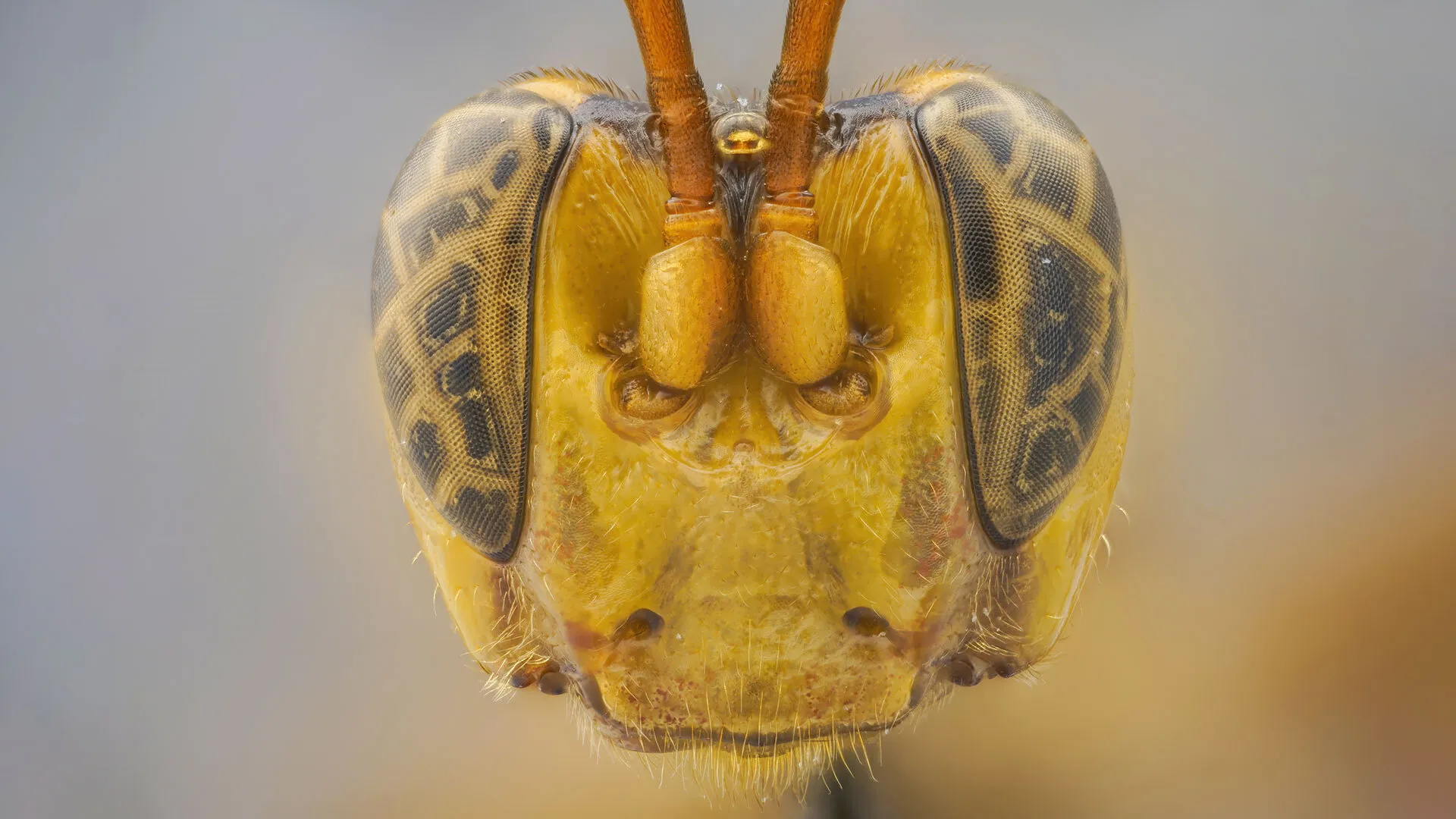
The newfound species, which was found in the National Reserve of Allpahuayo-Mishana in Peru, is named Capitojoppa amazonica. Its genus name is a combination of "capito," a reference to its large, bulbous head; and "joppa," because the newfound wasp is similar to ones in the genus Joppa.
The golden body of the newfound parasitoid wasp species, Capitojoppa amazonica (female)
(Image credit: Kari M. Kaunisto)
Brandon Claridge, a doctoral candidate in biology at Utah State University, and colleagues discovered the strange wasp species as part of a long-term surveying process, in which they laid malaise traps, large, tent-like structures that capture flying insects in the understory of the rainforest. The new wasp, which can grow up to 0.7 inch (1.7 centimeters) long, is a "solitary endoparasitoid," meaning it lays a single egg inside the body of its host. Caterpillars, beetles, and even spiders can fall prey to this voracious parasite.
"Once the host is located and mounted, the female will frantically stroke it with her antennae," Claridge told Live Science in an email. "If acceptable, the female will deposit a single egg inside the host by piercing it with her ovipositor (a tube-like, egg-laying organ)."
After a few days, the eggs will hatch and the newly hatched larvae will eat the host from the inside out. These larvae then continue to develop inside a hard protective shell, or pupae inside the corpse of their host, only emerging once they have transformed into adult wasps.
Feeding on its dead host probably isn't the only macabre behavior exhibited by C. amazonica. After stabbing their hosts, similar wasps will then suck the hemolymph, the bloodlike fluid found in insects, from the weeping wound, Claridge said.
In some species, "females will even stab the host with the ovipositor and feed without laying an egg as it helps with gaining nutrients for egg maturation," Claridge said.
Sign up for the Live Science daily newsletter now
Get the world’s most fascinating discoveries delivered straight to your inbox.
C. amazonica is just one of 109 newfound species the team found through trapping.