















Path to Alternative Fuel Found in Termite Guts
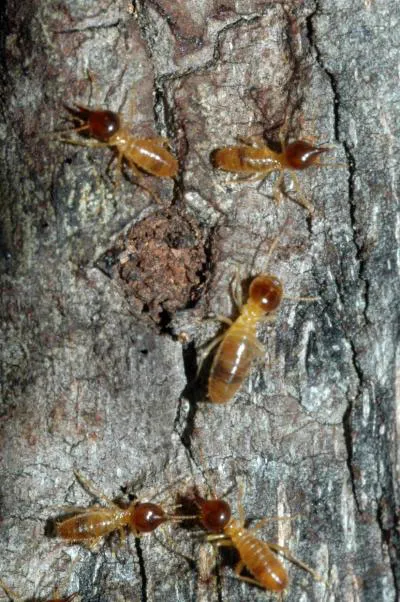
Anyone who’s ever had a termite problem knows that the pests can eat up walls fairly quickly. Their secret is a type of gut bacteria that turns wood into digestible sugar. Now researchers have moved closer to harnessing these unique microbes to help fuel much bigger things, like cars. Thus far, significant amounts of alternative fuels like ethanol have been made from a limited number of crops, such as corn. Even then, only the kernels are used since the cob, stalk and leaves contain cellulose, a complex molecule that needs to be broken down into sugar down before conversion.
The microbes may solve this problem since they unleash special enzymes that break down cellulose and other rugged compounds. This possibility is being explored at the U.S. Department of Energy's Joint Genome Institute, where scientists have isolated two microbes that release the wood-degrading enzymes.
One of the microbes, fibrobacters, has bacterial relatives known to degrade cellulose in cows’ guts, explained Phil Hugenholtz, who co-authored a study on this work, detailed in the Nov. 22 issue of the journal Nature.
Stomach bacteria in cows are also being studied in hopes of improving biofuel production.
Still, "adapting these findings for an industrial-scale system is far from easy," said Eddy Rubin, JGI director. "Termites can efficiently convert milligrams of lignocellulose into fermentable sugars in their tiny bioreactor hindguts. Scaling up this process so that biomass factories can produce biofuels more efficiently and economically is another story.”
To get there, he added, researchers need to conduct additional studies to define the specific genes responsible for the breakdown of cellulose.
- Power of the Future: Top 10 Ways to Run the 21st Century
- Top 10 Emerging Environmental Technologies
- Quiz: What's Your Environmental Footprint?
Get the world’s most fascinating discoveries delivered straight to your inbox.