Scientists Worry About Potential Risks of Nanotechnology in Food

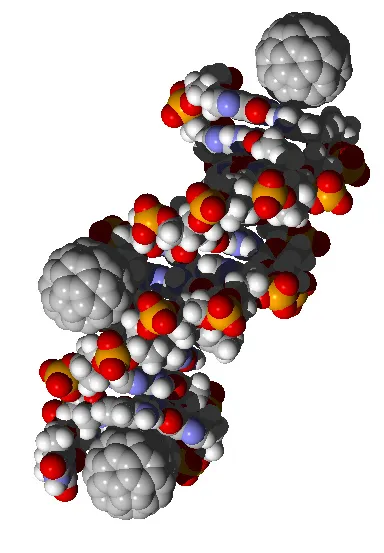
In the next five years, dozens of food and agriculture products could emerge based on nanotechnology, including a chocolate milkshake that supposedly tastes better and is more nutritious than conventional shakes and chickenfeed additives that can remove dangerous germs from poultry.
However, investigators caution research is lacking into the environmental, health and safety risks posed by nanotechnology when it comes to food and agriculture.
The findings are detailed in a report released today from the Project on Emerging Nanotechnologies at the Woodrow Wilson International Center for Scholars in Washington, D.C.
"This should serve as a wakeup call. We have an opportunity to see what is in the future and to focus on health and safety research now," researcher Jennifer Kuzma, a biochemist and risk policy expert at the University of Minnesota at Minneapolis, told LiveScience.
Invisible technology
Nanotechnology deals with construction blocks only billionths of a meter or nanometers large, hundredths of a wavelength of visible light. Substances at that scale can take on radically different properties not seen in their bulk counterparts.
For instance, while gold is normally chemically inert, which keeps gold rings lustrous, gold nanoparticles can prove highly reactive.
Get the world’s most fascinating discoveries delivered straight to your inbox.
As nanotechnology takes advantage of these novel traits for use in a wide and growing range of applications, concerns are growing as to whether nanoparticles, nanotubes and other nanoscale components might have unforeseen consequences when exposed to humans or the environment. For instance, a great deal of conflicting data surrounds the issue of whether or not carbon nanotubes are toxic.
To see what products might be coming down the pipeline, Kuzma and her research assistant Peter VerHage analyzed federally funded research and development projects oriented toward food and agriculture applications, supplemented with data from the U.S. Patent and Trademark Office. The U.S. government invests about $1.2 billion annually on nanotechnology research.
They discovered 160 such projects, more than 30 of which they estimate could produce a commercially viable application in five years or less. Most of the others have the potential to generate a commercial product in the next 15 years, they added.
Food products
A majority of these projects are focused on the food industry. Examples include wrappers that can detect whether or not food is safe to eat or nanomaterials aimed at enhancing the biological activity of dietary supplements.
When it came to agriculture, Kuzma and VerHage found projects focused on developing nanomaterials to neutralize pollutants or extremely sensitive devices to monitor how water flows through farmlands, to perhaps reveal how to stop runoff from crops or prevent livestock from contaminating nearby streams and lakes.
"However, what concerns me is that there is not enough information on the toxicity of some nanomaterials mentioned with regard to food and agriculture—for instance, carbon nanotubes, or silver or titanium dioxide nanoparticles," Kuzma said.
One project proposes to use carbon nanotubes on the surfaces of milk pasteurization equipment to prevent the equipment from getting fouled.
"I don't know whether that's a good idea or not. That's the point. We don't have enough information as a society to decide that," Kuzma said.
"The most important aspect of the database we created is that anyone can search it, to help people think about the future and anticipate policy and risk issues," she added.
Related Stories
- Nanotech Now: Tiny Technology All Around You
- Manufactured Nanoparticles Might Pose Health Threat
- Microbe and Machine Merged to Create First 'Cellborg'
- Nanotechnology May Need Regulation
- All About Nanotechnology
Small Stuff
- Gallery: Micromachines
- World’s Smallest Car Gets Microscopic Motor
- The World’s Smallest Robot