Read the latest science news and recent scientific discoveries on Live Science, where we've been reporting on groundbreaking advances for over 20 years. Our expert editors, writers and contributors are ready to guide you through today's most important breakthroughs in science with expert analysis, in-depth explainers and interesting articles, covering everything from space, technology, health, animals, planet Earth, and much more.


-
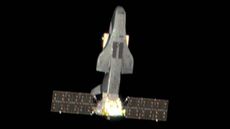 First clear image of China's mysterious 'divine dragon' space plane revealed in US government report
The Defense Intelligence Agency's latest "Challenges to Security in Space" report included a declassified satellite photo of China's Shenlong, or "divine dragon," space plane, which has released at least nine mysterious payloads into low Earth orbit since 2022.
space-exploration -
 IBD may transform neurons in the gut, triggering pain even when inflammation is under control
A new study with data from mice and human tissues suggests that, in ulcerative colitis, immune cells in the gut might make pain-sensing nerves hypersensitive.
immune-system -
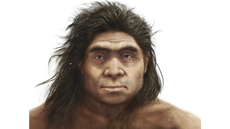 Our extinct cousins the Denisovans had a 'distinctive' appearance, new analysis reveals
Paleoproteomic analysis of fossils from northern China reveals that Denisovans had a distinctive physical appearance.
5 Commentshuman-evolution -
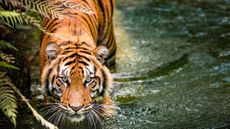 Rare tiger behaviors captured on camera show 'we really know nothing about them'
The PBS Nature film "Tiger Island" captures rare glimpses of tiger behavior, including a mother, father and cubs spending time together — a first for these usually solitary cats.
cats -
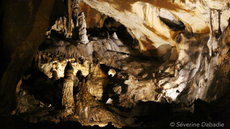 30,000-year-old bone found in French cave reveals vast genetic connections between people of Eastern and Western Europe during the Stone Age
Scientists sequenced the genome of a woman who lived 30,000 years ago and discovered that she had mixed Eastern and Western European ancestry.
human-evolution -
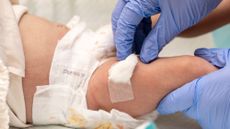 Hepatitis B could surge, infecting millions more in childhood, under proposed CDC guidance
A proposed shift in recommendations for hepatitis B vaccination in the U.S. could leave millions of young adults unprotected, a new modeling study suggests.
viruses-infections-disease -
 Native Hawaiians and Easter Islanders came from same 'ultravoyager' group
Members of the same people who settled Easter Island also discovered Hawaii, a new study finds.
archaeology -
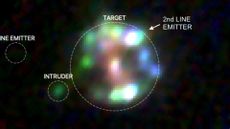 James Webb telescope discovers rare ring galaxy and 'intruder' 2 billion years after the Big Bang
Astronomers using the James Webb Space Telescope have observed a galaxy with a ring of newborn stars as it appeared 2.1 billion years after the Big Bang — hinting that the early universe may have been more chaotic than once thought.
cosmology -
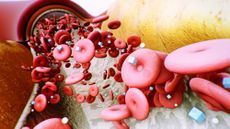 Scientists invent implant that can transform sugar in the blood to treat type 2 diabetes
An experimental medical device uses a tiny amount of electricity to spark a chemical reaction and remove extra sugar from the bloodstream.
health -
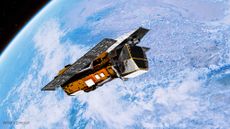 NASA's Swift observatory ends 22-year mission, will crash to Earth 'in the next few weeks'
NASA's Neil Gehrels Swift Observatory has officially ended its mission after more than 20 years, as it approaches a fiery reentry through Earth's atmosphere.
space-exploration -
 A neglected particle from the dawn of time could explain why everything in the universe exists
A hypothetical particle could have briefly held more energy than everything else in the infant universe combined, which could help explain how matter won out over antimatter.
particle-physics -
 Daylight saving time 2026: It's time to change your clocks this Sunday
When does daylight saving time end in 2026? Here's when we change our clocks this fall, and why.
physics-mathematics -
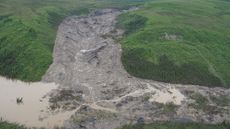 'A potential glimpse into the future': Climate change has triggered 'permafrost landslides' with house-size blocks of ice in Canada
For the first time, researchers have identified a new type of landslide of permafrost in Canada's Northwest Territories.
2 Commentsclimate-change -
 Colorectal cancer cases in kids have risen sixfold over past 2 decades — researchers are racing to understand why
Analysis While rare, colorectal cancer is becoming more common in kids, teens and young adults, and the disease appears particularly aggressive in this age group.
Analysis -
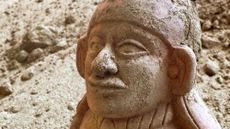 Rare burial of elite toddler from pre-Inca culture discovered in Peru
Archaeologists have uncovered the 1,500-year-old burial of an elite toddler from the Moche culture in Peru.
americas -
 10 minutes is all it takes for AI assistance to erode your motivation, study shows
In a set of problem-solving experiments, researchers found that people who used AI to get answers were more likely to give up and fail when that help was removed, compared with people who did not use AI.
artificial-intelligence -
 Watch the full 'Hunter's Moon' rise next to Saturn this weekend
You'll have two chances to see October's full Hunter's Moon rise dramatically this week. Here's when to get the best views.
the-moon -
 Christina Applegate misdiagnosis: Why can MS be difficult to diagnose?
Analysis MS advocate Christina Applegate recently announced that her MS diagnosis was incorrect, based on new test results. Why can the disease be difficult to identify?
Analysis -
 Scientists can now 'watermark' AI-generated proteins to deter bioweapon creation. But will it really work?
Analysis A new technology encodes an invisible mark into the structure of AI-generated proteins, but experts said the system's guardrails can still be bypassed.
Analysis


