













The Everglades: River of Grass

The Everglades is an intricate system of subtropical wetlands, lakes and rivers, originally covering more than 4,000 square miles (10,000 square kilometers) from Lake Okeechobee to the southern tip of Florida. However, due to development, the Everglades has been reduced to less than half of that size, according to the Florida Museum of Natural History.
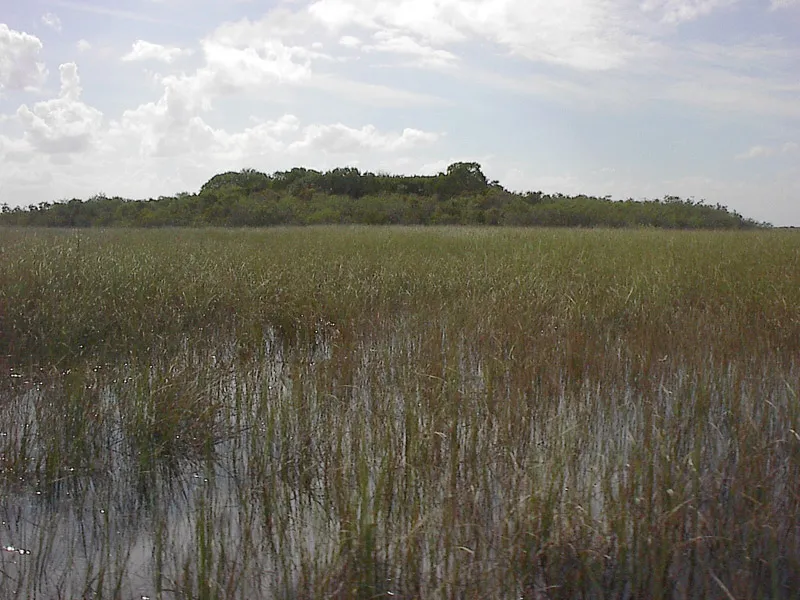
While sometimes thought of as a giant swamp, the Everglades is technically a very slow-moving, shallow river. Because sawgrass marsh dominates this river, it was traditionally called the "River of Grass." In fact, Native Americans living in the area called it Pahayokee, meaning the "grassy waters." The subtropical climate in the area features hot and humid summers and mild winters. Around 80 percent of rainfall occurs in the summer, according to the World Wildlife Fund (WWF).
The Everglades hosts a variety of diverse habitats and is home to unique wildlife, including almost 70 threatened and endangered species, such as the manatee, the American alligator, the sea turtle, the Florida panther and a variety of birds, according to Maven's Notebook. The Everglades National Park, established in 1947, protects the southern 20 percent of the original Everglades area; it's a UNESCO World Heritage Site, UNESCO International Biosphere Reserve and Ramsar Wetland of International Importance.
Ecosystems
The Everglades contains several different ecosystems. These include the following:
Coastal lowlands, or coastal prairies, are located on the western coast of the Everglades, just inland from the mudflats of Florida Bay. The inland movement of mud during tropical storms and hurricanes forms these lowlands. The area hosts a variety of salt-tolerant shrubs and plants, such as succulents and other low-growing, desert-like plants.
Freshwater sloughs, are relatively deep, marshy rivers that act as the main routes of water flow in the Everglades. These waterways move at about 100 feet (30 meters) per day, according to the National Park Service (NPS). The two main sloughs in the Everglades are Shark River Slough, also called the "River of Grass," and the smaller Taylor Slough, which lies to the east. Both discharge into Florida Bay.
Freshwater marl prairies are located along the eastern and western sides of the Everglades and border the deeper sloughs. "Marl" is thin, calcareous soil — chalky soil composed of calcium carbonate — on top of limestone bedrock. While these prairies look similar to sloughs, the water in the freshwater marl prairies is shallower and the saw grass is shorter. These prairies feature a variety of low-growing vegetation and periphyton — a mixture of bacteria, algae, detritus and microbes — which serve as a vital food source for tadpoles, fish and invertebrates, according to the NPS.
Get the world’s most fascinating discoveries delivered straight to your inbox.
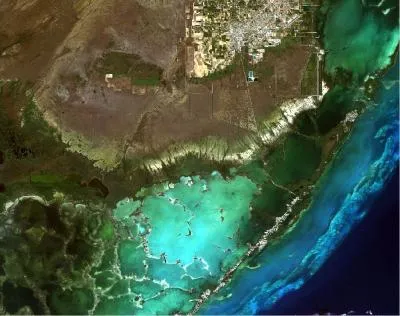
Marine environments in the Everglades include reefs, estuaries, mangroves, seagrass beds and bays, according to the UF. The Everglades' flow of water eventually drains into the Gulf of Mexico to the southwest and Florida Bay to the south. Florida Bay is the largest body of water within Everglades National Park, covering more than 800 square miles (2,072 square kilometers), according to the NPS. Florida Bay consists of a series of shallow water basins.
Pine forests often take root in the exposed limestone in southern Florida. A healthy pine forest needs fire to help clear away the faster-growing hardwoods that block sunlight from reaching the pine seedlings. The Everglades National Park conducts regular prescribed burns designed to imitate the natural pattern of fire and keep the pines healthy, according to the NPS.
Mangroves are a variety of highly salt-tolerant trees that can thrive in channels, rivers and tidal waters, which consist of a mix of fresh water and salty ocean water. The most common types are red mangroves, black mangroves and white mangroves. The Everglades National Park has the largest area of protected mangrove forests in the Northern Hemisphere. Mangroves act as a nursery for many marine animals. Wading birds congregate in the mangroves during the dry months to feed and nest. Mangrove forests also hold tight in hurricanes.
Cypress trees are deciduous conifers able to grow and thrive in standing water. Clusters of cypress trees are commonly found in solution holes — pitted terrain formed in broken-down, porous rock when the sea levels and water table were lower than they are now. In areas with less-favorable growing conditions, smaller cypress trees, known as dwarf cypress, grow in the thinner, poorer soil on drier land, according to the NPS.
A hardwood hammock is a mature hardwood forest that grows on naturally elevated mounds known as "tree islands." These can rise above the marsh to heights of a few inches up to 6 feet (1.8 m). Because these trees are slightly elevated, they rarely experience flooding, according to the NPS. They are also protected from fires, as the acids from decaying plants dissolve the limestone around each island, creating a natural moat. [Photos: Florida Everglades: Follow the 'River of Grass']
Evidence of ancient people in Everglades
The Everglades' hardwood hammocks often provide the only dry ground in an otherwise wet and marshy habitat. Because of this, these areas provide a safe haven for a variety of animal and plant species. In fact, tree islands have up to three times the plant and animal diversity of the surrounding wetlands, according to the U.S. Geological Survey (USGS).
Previous research suggested that tree islands developed from protrusions in the rocky layer of carbonate under the marsh. Now, quite a bit of evidence shows that tree islands were at least partially formed by the activities of ancient people living in the area, researcher Gail Chmura, a paleoecologist and geomorphologist at McGill University in Montreal, told Live Science for a 2011 article. In fact, researchers suggest that these islands might actually have developed from ancient garbage mounds left behind from human settlements about 5,000 years ago.
"So far, the earliest evidence for human occupation of the Everglades dates to the Late Archaic period or around 4500 B.P. [Before Present]," Traci Ardren, an anthropological archaeologist and professor in the department of anthropology at the University of Miami, told Live Science. "Scientists do not know what these ancient people called themselves, so they are known as the Archaic population of south Florida." In a recent study, Ardren investigated the impact of ancient humans on the formation of tree islands in the Everglades. Her findings were published in the journal The Holocene.
"We do know that they were mobile fisher-hunter-gatherers and lived on wild food available from the freshwater marshlands of the Everglades as well as marine resources from the coast.," she said. "They also made pottery and fashioned tools from chipped stone, bone and wood."
Surveys show that Everglades tree islands have been used by people since the Late Archaic, Ardren said. The evidence includes food remains and discarded tools, and there is also evidence of ceremonial and mortuary use.".
"Human food remains are rich in organic phosphates, which encouraged plant growth," Ardren said. "Given that so many tree islands have these sorts of remains, it is clear that human intervention helped many tree islands grow in size and mass from prehistoric to current times."
Animals
The Everglades is home to a wide variety of wildlife, including 360 bird species, according to the National Wildlife Federation (NWF). This area hosts a large number of wading birds, such as the roseate spoonbill, the glossy ibis, the wood stork, and a variety of egrets and herons.
The Everglades is also home to the endangered Florida panther. By the time panthers were listed as a federally endangered species in 1967, only 12 to 20 of the animals existed, limited to a small breeding population at the tip of Florida, according to the Defenders of Wildlife conservation nonprofit. Today, around 100 to 180 adult and subadult panthers live in southern Florida, and they occupy only around 5 percent of their historical range. Other common Everglades mammals include the skunk, raccoon, white-tailed deer, opossum, red fox and eastern cottontail bobcat.
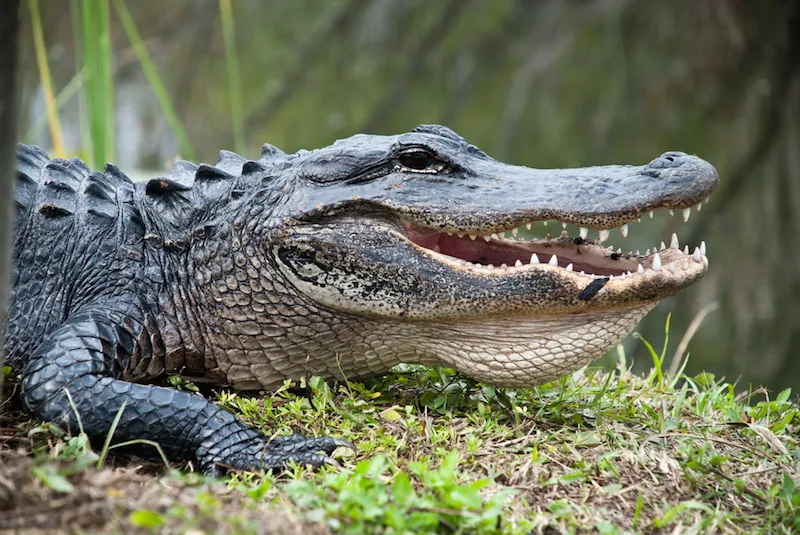
The Everglades is well-known for its many reptiles, including alligators, crocodiles and 27 species of snakes, according to the NWF. Marine animals include the West Indian manatee and the bottlenose dolphin.
Invasive species
The Everglades faces a major problem of invasive species. These animal and plant species from other parts of the world can take advantage of the unbalanced conditions in the area, primarily due to the alterations of natural water flow and wildfire patterns, according to the NWF. In addition, many invasive animals thrive in the Everglades because they don't have any natural predators to keep their populations in check.
Non-native plants have invaded around 1.7 million acres (690,000 hectares) in the Everglades. The invaders include the Brazilian peppertree, the Chinese privet, the broad-leaved paperbark tree and the Old World climbing fern, according to the NWF.
One of the most well-known invasive animals is the Burmese python, which likely escaped into the Everglades after hurricanes destroyed local breeding facilities. These snakes are incredibly destructive to the natural ecosystem. They have drastically reduced the populations of most of the small mammals in Everglades National Park and have even preyed on alligators. To make things worse, these snakes are extremely secretive and hard to find.
Other invasive animals include Cuban tree frogs, which prey on smaller native frogs, and the Nile monitor, a large lizard that eats crocodile eggs and burrowing owls, according to the NWF.
Conservation
The Everglades was once a large, intricate system of rain-fed wetlands, lakes and rivers covering almost 3 million acres (1.2 million hectares) of land. However, humans have been altering the Everglades landscape since the 19th century, by clearing land for agriculture and urban development and by setting up flood-control structures and water diversions. As a result, the size of the Everglades has decreased significantly.
In 1947, Marjory Stoneman Douglas published her famous book "The Everglades: River of Grass," bringing much needed attention to the area and inspiring conservation. Soon after, on Dec. 6, 1947, the government set aside 1.5 million acres (600,000 hectares) of protected land as the Everglades National Park. Still, the Everglades is half the size it was 100 years ago, according to Bergeron Everglades Museum and Wildlife Foundation.
Draining and algae problems
For thousands of years, when the water from Lake Okeechobee got too high, it would naturally spill over into the River of Grass, flowing all the way to Florida Bay. In the late 1800s, however, people began draining the water from the land, primarily to turn the wetlands into sugar farms. Homes and businesses would soon follow suit, draining water for their own purposes.
In 1928, a major Category 5 hurricane, known as the Okeechobee hurricane, struck the area. It was the one of the deadliest disasters in U.S. history, killing 2,500 people. Storm surge from the lake covered hundreds of miles of land. In order to prevent another disaster like this one, the giant Herbert Hoover Dike was built to hold in the waters of Lake Okeechobee. Because the natural flow of water to the Everglades was now blocked, canals were created that would drain excess water to both coasts of Florida when levels became dangerous. Unfortunately, once the Everglades stopped receiving regular water flow from the lake, the area became much drier.
One major problem with draining water from Lake Okeechobee into the ocean is that the lake has high levels of the nutrient phosphorus, a key ingredient in fertilizers. Phosphorus overfeeds algae and can cause major algal blooms that harm the environment.
"We get blooms of cyanobacteria in Florida Bay during the wet season when water from the sugar cane fields travels south through the Everglades into Florida Bay," Larry Brand, a professor of marine biology and ecology at the Rosenstiel School of Marine and Atmospheric Science at the University of Miami, told Live Science. He researches algal blooms in coastal waters downstream from the Everglades.
"We get blooms of cyanobacteria in the St. Lucie Estuary and southern Indian River Lagoon [IRL] when large volumes of nutrient-rich water is released from Lake Okeechobee," he said.
Cyanobacteria are a type of bacteria that obtain energy through photosynthesis; they are the only photosynthetic prokaryotes able to produce oxygen.
"We see the same thing when Lake O[keechobee] water is released west into the Caloosahatchee River," Brand said. "The high nutrients in Lake O are from many years of back-pumping from the sugar cane fields in the south and various types of ranching and agriculture to the north coming down the Kissimmee River."
Additional resource
