Photos: A Bronze Age Burial with Headless Toads
Get the world’s most fascinating discoveries delivered straight to your inbox.
You are now subscribed
Your newsletter sign-up was successful
Want to add more newsletters?
Delivered Daily
Daily Newsletter
Sign up for the latest discoveries, groundbreaking research and fascinating breakthroughs that impact you and the wider world direct to your inbox.
Once a week
Life's Little Mysteries
Feed your curiosity with an exclusive mystery every week, solved with science and delivered direct to your inbox before it's seen anywhere else.
Once a week
How It Works
Sign up to our free science & technology newsletter for your weekly fix of fascinating articles, quick quizzes, amazing images, and more
Delivered daily
Space.com Newsletter
Breaking space news, the latest updates on rocket launches, skywatching events and more!
Once a month
Watch This Space
Sign up to our monthly entertainment newsletter to keep up with all our coverage of the latest sci-fi and space movies, tv shows, games and books.
Once a week
Night Sky This Week
Discover this week's must-see night sky events, moon phases, and stunning astrophotos. Sign up for our skywatching newsletter and explore the universe with us!
Join the club
Get full access to premium articles, exclusive features and a growing list of member rewards.
Bronze Age cemetery
An aerial photo shows the place where archaeologists found more than 60 ancient graves in a Bronze Age cemetery in Jerusalem.
Leftovers from a funerary feast?
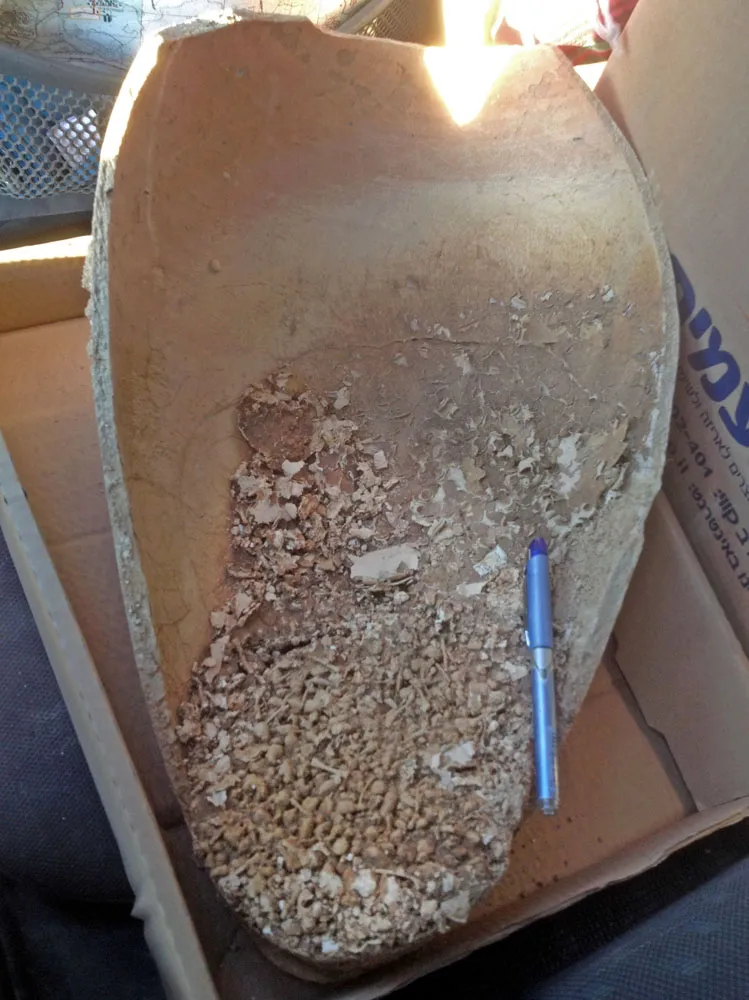
In one of the rock-cut tombs, archaeologists made a rare discovery: a jar full of bones from nine headless toads. The toads had been decapitated before they were buried with the dead, possibly as a way to prepare the animals to be "eaten."
Shaft burial
The jar was found inside a narrow tomb that had been sealed for thousands of years.
Intact jars
One poorly preserved skeleton was found on its back inside the burial chamber, among intact jars and other ceramic vessels.
4,000-year-old feast?
An archaeologist shows a ceramic jar being brought out of the tomb, for the first time in 4,000 years.
Intact pottery
Vessels full of food were common offerings during funerals of this period.
An offering for the afterlife
People often buried the dead with objects or offerings that could serve them during their passage to the afterlife.
Get the world’s most fascinating discoveries delivered straight to your inbox.