The heads and tails (obverse and reverse) of the two newfound Celtic gold coins from Arisdorf, Bärenfels. The stater has a diameter of just under 0.7 inches (2 centimeters).
While surveying a Swiss bog, two volunteer archaeologists discovered what may be two of the oldest Celtic coins ever found in the country, and they may have been offerings to ancient gods.
The two gold coins were minted almost 2,300 years ago, around the mid-third century B.C. "This makes them part of a very small group of just over 20 known examples of the oldest Celtic coins from Switzerland," Swiss archaeologists said in a translated statement released Dec. 18.
One coin is a stater that weighs 0.28 ounces (7.8 grams), and the other is a one-fourth stater with a weight of 0.06 ounces (1.86 grams). The term "stater" derives from ancient Greek coins. As mercenaries, the Celts of mainland Europe were increasingly given Greek coins as payment at the end of the fourth century B.C. These coins later served as inspiration for Celtic coinage at the beginning of the third century B.C., when the imitation started, as noted in the statement.
In this case, gold staters minted during the reign of Philip II of Macedon, the father of Alexander the Great, were imitated. Both coins showcase the profile of the Greek god Apollo on the "heads" side (obverse) and a two-horse chariot on the "tails" side (reverse).
However, the two newfound coins were modified slightly from their Greek originals. For example, on the smaller one's reverse, a triple spiral can be seen beneath the horses. This symbol, known as a triskele (also called a triskelion), appears frequently in Celtic art.
The rare coins were unearthed largely on a hunch. Between 2022 and 2023, volunteer archaeologists with Archaeology Baselland, the local archaeological department, discovered 34 Celtic silver coins found in the same area — the Bärenfels bog near the municipality of Arisdorf. This prompted Wolfgang Niederberger and Daniel Mona, also volunteer archaeologists with Archaeology Baselland, to do follow-up investigations there in spring 2025, when they discovered the two gold coins, according to the statement.
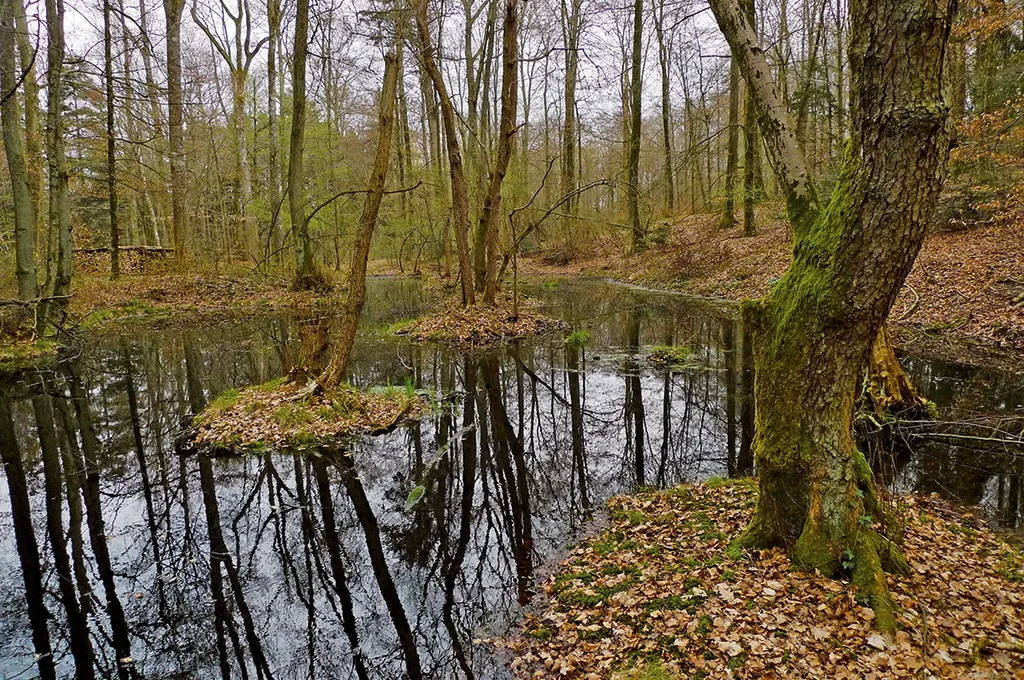
The Bärenfels bog in Switzerland has many water-filled sinkholes. The Celts often chose water-filled places like this for votive offerings.
It's possible these two coins were deposited as an offering to the gods, according to the statement.
Sign up for the Live Science daily newsletter now
Get the world’s most fascinating discoveries delivered straight to your inbox.
"Experts assume that Celtic gold coins were not used for everyday transactions. They were too valuable for that," the statement noted. Including salary payments, they may also have been used as diplomatic gifts, gifts to followers, to achieve political goals, or as dowries.
Celtic coins are frequently found near moors and bodies of water. This pattern is also evident in Arisdorf, where water-filled sinkholes form the Bärenfels bog. The Celts considered such places to be sacred and dedicated to gods, so it seems reasonable to assume that the coins were deliberately placed there as offerings, the statement noted.
Both coins will go on display together, along with the silver coins from the same site, in a special showcase in Basel starting in March 2026.
Celtic quiz: Test your knowledge about these fierce tribes once described by Julius Caesar
Marjanko Pilekić is a Germany-based researcher who specializes in numismatics, with additional interests in ancient history and archaeology. He holds a bachelor's degree in history from the University of Freiburg, a master's in ancient history from Heidelberg University, and completed his doctorate in numismatics at Goethe University Frankfurt. He formerly freelanced at Live Science, writing about exciting coin finds and other intriguing archaeological discoveries. He is now the head of the Finance and Economic History Collection at a museum in Berlin.
You must confirm your public display name before commenting
Please logout and then login again, you will then be prompted to enter your display name.