













Facts About the Bear Dog

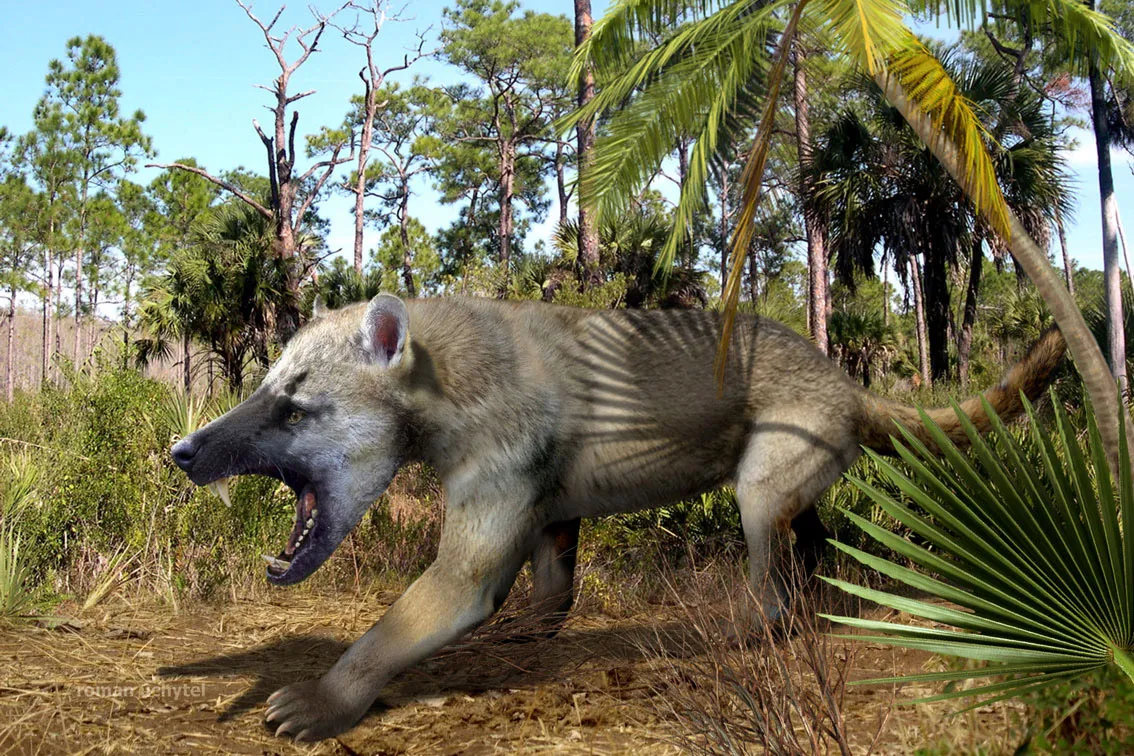
The bear dog, also called Amphicyon, shared features of bears (heavy-bodied, with feet planted flat on the ground) and dogs (relatively long legs and long snout), but they are neither bears (family Ursidae) nor dogs (family Canidae).
They were not specifically in the bear's or dog's scientific families, but they are classified in the Caniformia, or "dog-like" suborder. Modern animals in the Caniformia suborder include wolves, foxes, dogs, bears, sea lions and weasels. This makes bear dogs something like cousins to their namesakes. Also, these bear dogs should not be confused with the modern dog breed, the Karelian bear dog.
There were two main types of bear dogs. Some, like Borocyon robustum, had long limbs that were ideal for running and looked much like modern wolves. Others, such as Amphicyon longiramus, were stocky and looked more like modern bears, according to the Florida Museum of Natural History.
Size
Much like dogs and bears of today, bear dogs had a range of sizes. They could weigh just few pounds or grow to over 1,000 lbs. (450 kilograms). It is thought that the early evolutions of the bear dog were very small, around Chihuahua size. As they continued to evolve, they seemed to have become progressively larger, according to The Field Museum.
Evolving into bigger animals has several advantages and disadvantages. While becoming bigger would have enabled them to take down bigger prey and be higher on the food chain, they also would have required more food and reproduced more slowly.
"Their massiveness suggest that they could prey upon many kinds of mammals and other animals. Fortunately, they were extinct before humans appeared on the scene," said Wilkins.
Habitat
Bear dogs first appeared in Eurasia during the Eocene and Oligocene epochs (55.8 million to 23 million years ago), time periods full of warm weather and thick vegetation. The temperature around the world stayed around 86 degrees Fahrenheit (30 Celsius) during the Eocene period, according to the University of California Museum of Paleontology.
Get the world’s most fascinating discoveries delivered straight to your inbox.
Though the temperatures cooled in the Oligocene, it was still quite warm and vegetation flourished in most locations around the world, including North America and Africa. Bear dogs became extinct 5 million to 10 million years ago.
Diet
The bear dog's teeth were shaped to allow for an omnivorous diet, much like modern bears and modern dogs. Prey for smaller bear dogs may have included rodents while bigger beardogs would have eaten larger animals such as wild hogs. Bear dogs may have also enjoyed leaves and berries.
Additional resources
