















In Images: Trapping Yellowstone's Grizzlies

Tracking device attached
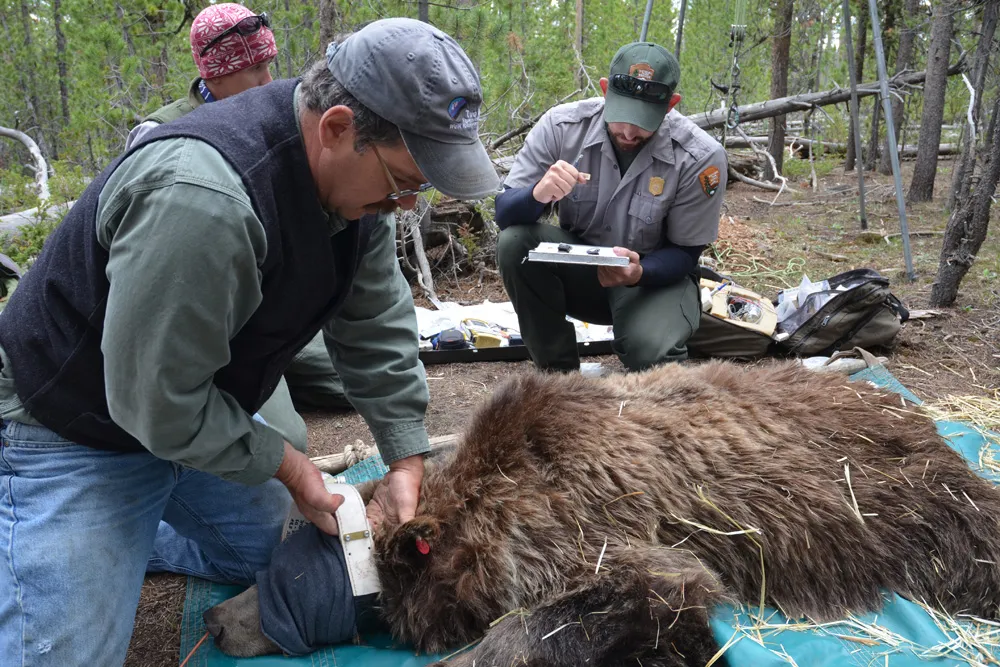
Researchers with the Interagency Grizzly Bear Study Team (IGBST) and the National Park Service fit a grizzly bear from the Yellowstone area with a radio collar as part of an ongoing effort to study the bears and figure out why the growth in its numbers has started to slow. Once a bear is radio collared, researchers can track its movements with telemetry.
Fast asleep

Researchers have tranquilized the bear and prepare to lift it out of the trap and onto the tarp for data collection. Once on the tarp the bear is easier to move.
Protective kerchief
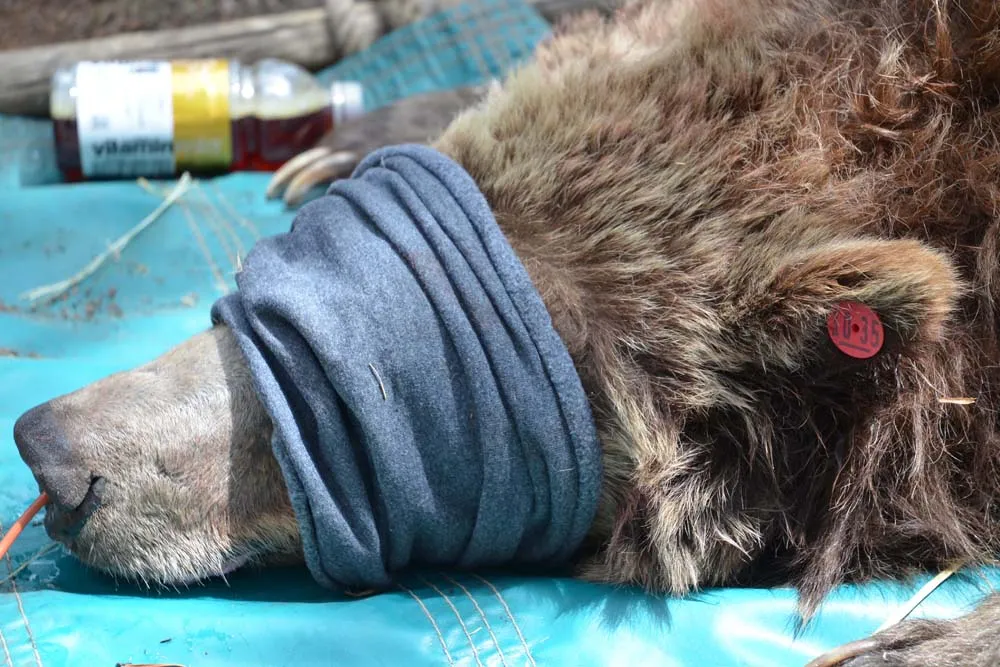
The kerchief over the bear's eyes protects it from dust and debris and reduces visual stimulation. The small tubing in its nose, known as a nasal cannula, delivers oxygen to the animal while it is tranquilized.
Data collection begins

Researchers begin gathering biological data from the bear.
What a big boy

A researcher measures the bear's head.
Dinnertime

A grizzly bear in the Shoshone National Forest, Wyo., peers over a scree field. The bear is feeding on army cutworm moths which provide excellent nutrition and are found in high elevation locations throughout the Greater Yellowstone Ecosystem.
Get the world’s most fascinating discoveries delivered straight to your inbox.
