













Infant Cadavers Were Prized by Victorian Anatomists

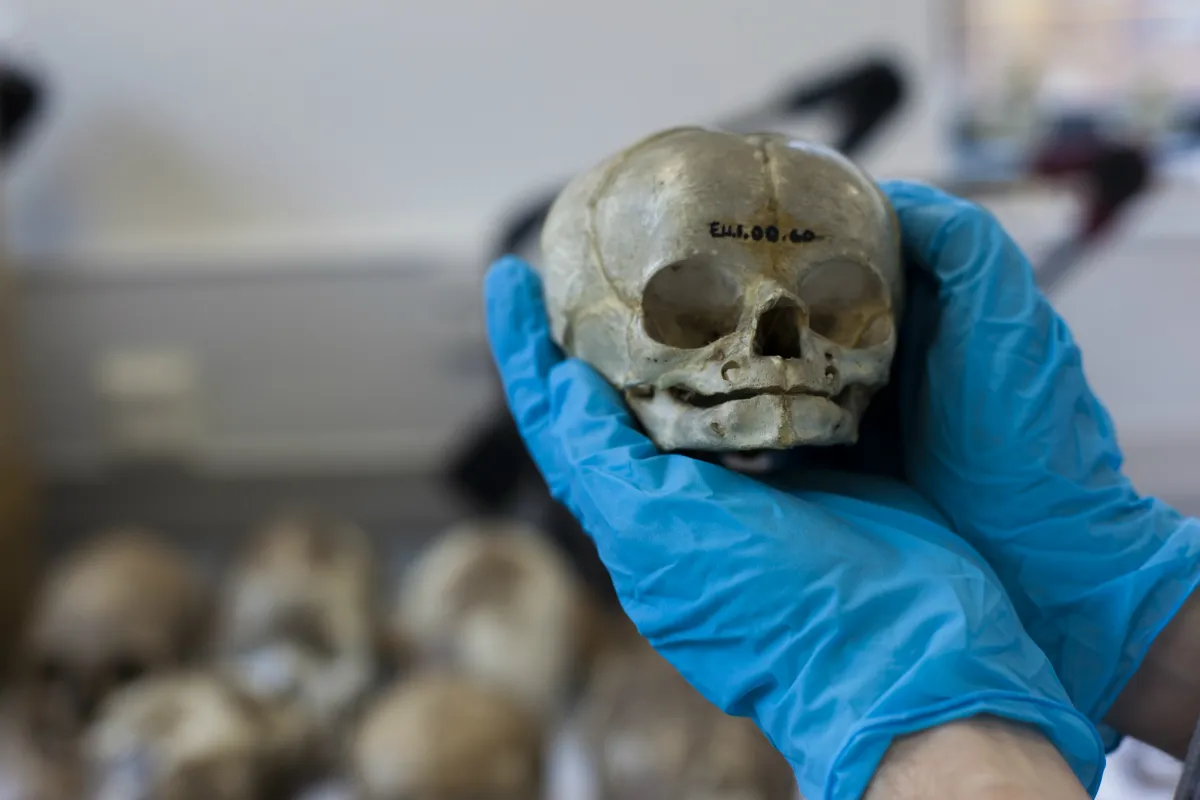
The remains of stillborn or miscarried fetuses and infants were more widely available and more important to 18th- and 19th-century anatomists than once thought.
At the time, cadavers were much sought after for anatomical study but were difficult to get, as society's view of dissection was overwhelmingly negative. Corpses of criminals and the very poor — typically, adult men — were easiest for anatomists to acquire, according to the researchers of a new study.
The new research is the first to examine how British anatomists analyzed the bodies of the very young — fetuses and infants — to explore the physical changes that occur during infancy and childhood. [Image Gallery: The Oddities of Human Anatomy]
Records show that these tiny cadavers were greatly valued and were frequently retained as permanent additions to medical collections — unlike many of the adult cadavers that ended up on a dissection slab, the researchers found.
Special treatment
The scientists gathered their data from the University of Cambridge in the U.K., exploring a little-known collection that dated from 1768 to 1913 and contained 54 infant and fetus specimens.
Some of the specimens are entire skeletons, but most are just skulls, according to study co-author Piers Mitchell, a biological anthropologist and lecturer at the University of Cambridge, and president of the Paleopathology Association, a global organization of researchers studying ancient diseases in humans and animals.
Mitchell noted that special care was taken when anatomists prepared infant and fetal bodies — more so than in adult specimens. The skulls, for example, were typically preserved whole. In all the specimens, there was only one fetal skull where the top had been surgically removed. However, this procedure — known as a craniotomy — was typical for adult skulls that were prepared by anatomists, Mitchell told Live Science in an email, as it allowed them to examine the layers of the skull surrounding the brain, as well as the brain itself.
Get the world’s most fascinating discoveries delivered straight to your inbox.

Further analysis of the tiny skulls' surfaces indicated that the soft tissue had been removed with more delicate instruments than were commonly used for adult corpses — likely to protect the more fragile bone.
Adult bodies that had undergone dissection were frequently disposed of in graves at hospitals or parish churches, according to study co-author Jenna Dittmar, a biological anthropologist at the University of Cambridge. The researchers found few children's bodies with signs of dissection at these burial sites, suggesting that their cadavers had been kept "for teaching or display," Dittmar said in a statement.
And anatomists put these cadavers to good use, Mitchell told Live Science.
"Children’s bones lengthen at the cartilage growth plates at the end of long bones," Mitchell said. "By adulthood these growth plates disappear. They could see for the first time how the bones grow at different ages."
This unique knowledge, which could only be obtained from examining very young, developing bodies, "made them essential to the study of anatomy," Dittmar added.
Supply and demand
But where did the bodies come from? The study authors cited statistics gathered between 1757 and 1763 from workhouses and poorhouses — public institutions where destitute people were housed — describing an infant mortality rate of close to 100 percent. Unclaimed bodies of people of any age were frequently given or sold to anatomists. And families too poor to afford a burial might also sell a stillborn infant.

But many of the bodies that found their way to anatomical study took a grimmer path, the researchers noted. Illegitimate births were highly stigmatized during the 18th and 19th centuries, and infanticide skyrocketed during the Victorian era with the passing of the so-called "New Poor Law" in 1834; that law ended parish relief for unwed women, and it left many who were already in dire straits desperate and unable to care for their infants.
A newspaper reported in 1866 that "in England and Wales there could not be fewer than 1,000 cases of infanticide annually," according to the study authors. Anatomists welcomed these infant corpses, as well as unwanted fetuses that were miscarried or stillborn, the authors wrote.
And a number of the skeletons and anatomical specimens that were obtained in the 1800's are still used by medical schools in the U.K. today for teaching anatomy and pathology, Mitchell told Live Science.
It's difficult to find a silver lining in the death of the very young. But as far as the anatomists of hundreds of years ago were concerned, those deaths, however unfortunate, provided an invaluable opportunity for them to make advances in medical knowledge. At the very least, observation of the dead played a critical role in understanding — and eventually improving — health and well-being in the living, the researchers noted.
The findings were published online today (June 30) in the Journal of Anatomy.
Original article on Live Science.

Mindy Weisberger is a science journalist and author of "Rise of the Zombie Bugs: The Surprising Science of Parasitic Mind-Control" (Hopkins Press). She formerly edited for Scholastic and was a channel editor and senior writer for Live Science. She has reported on general science, covering climate change, paleontology, biology and space. Mindy studied film at Columbia University; prior to LS, she produced, wrote and directed media for the American Museum of Natural History in NYC. Her videos about dinosaurs, astrophysics, biodiversity and evolution appear in museums and science centers worldwide, earning awards such as the CINE Golden Eagle and the Communicator Award of Excellence. Her writing has also appeared in Scientific American, The Washington Post, How It Works Magazine and CNN.