













Rare Wall Mural from Roman Era Uncovered in London

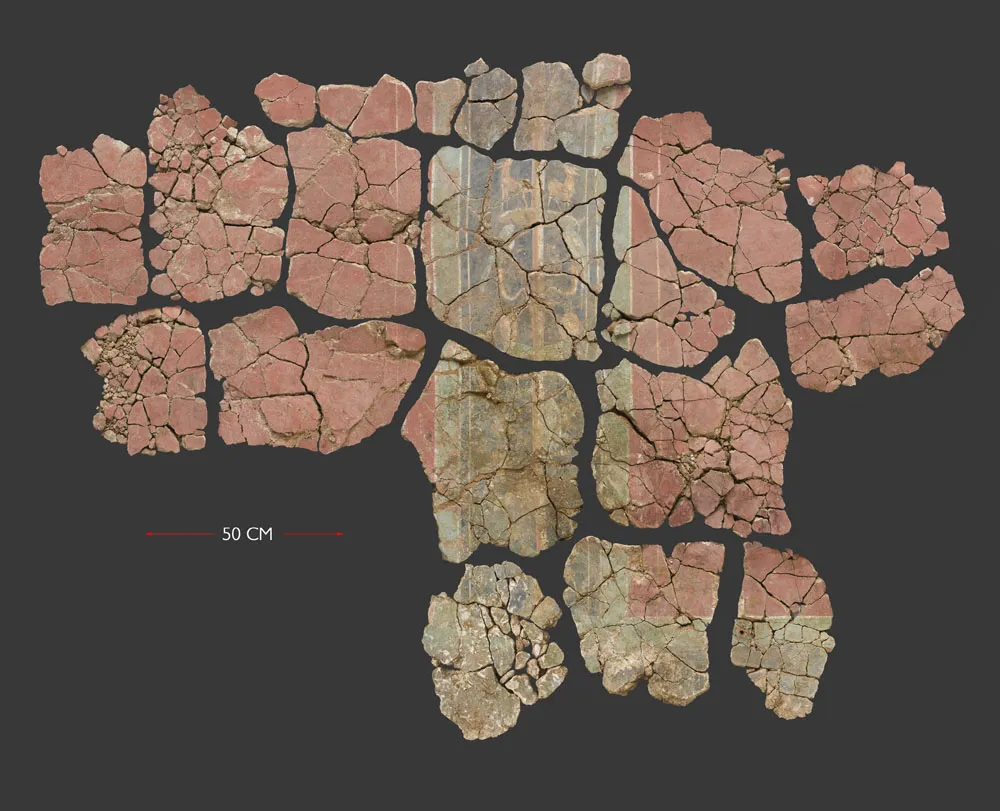
Nearly 20 feet (6 meters) below the streets of London, archaeologists discovered a fragile Roman painting featuring deer and birds that may have once decorated the wall of a wealthy citizen's home.
Excavators from the Museum of London Archaeology (MOLA) were carefully digging for Roman artifacts at 21 Lime Street, near Leadenhall Market in central London, ahead of the construction of an office building at the site.
They say the newly uncovered fresco was discovered facedown in the soil. The painted wall was likely toppled and sealed underground aroundA.D. 100, when Roman builders flattened the area to make way for construction of the civic center for the city, the forum basilica. [See Images of the Roman Fresco]
Paintings are far more fragile than stone and metal artifacts, so not many ancient wall murals survive intact in the archaeological record. There are famous examples from Pompeii, the city that was preserved in volcanic ash by the eruption of Mount Vesuvius in A.D. 79. But in London, complete paintings are much more scarce, though fragments of Roman wall plaster have been found before, MOLA archaeologists said. The newfound fresco, its painted surface just a millimeter thick, may be one of the oldest artworks of its kindto survive from the time of Roman Britain, they added.
At the construction site on Lime Street, the painted plaster was lifted from the ground in 16 sections, still encased in dirt. Only after a "microexcavation"in a lab were the archaeologists able to see what the surviving section of the painting looked like: It had red panels on the sides and at the center, there were green and black vertical panels with deer reaching their necks up to nibble attrees above a set of blue-green birds and a vine woven around a candle holder.What’s left of the fresco measures about 8 feet (2.5m) across and 5 feet (1.5 m) high.
"This was a really challenging but rewarding conservation project," Liz Goodman, an archaeological conservator for MOLA, said in a statement. "We were up against the clock working on this huge and fragile fresco but it was a joy to uncover the decorative plaster that hadn’t been seen for nearly 2,000 years."
The researchers are still studying the painting and the archaeological records from the site to get a better idea of what life was like in this section of the city during the Roman period, but they said the painting most likely adorned the wall of a reception room of a private home where guests were entertained.
Get the world’s most fascinating discoveries delivered straight to your inbox.
Follow Live Science @livescience, Facebook & Google+. Original article on Live Science.
