













Weird Accident Damaged King Tut's Beard

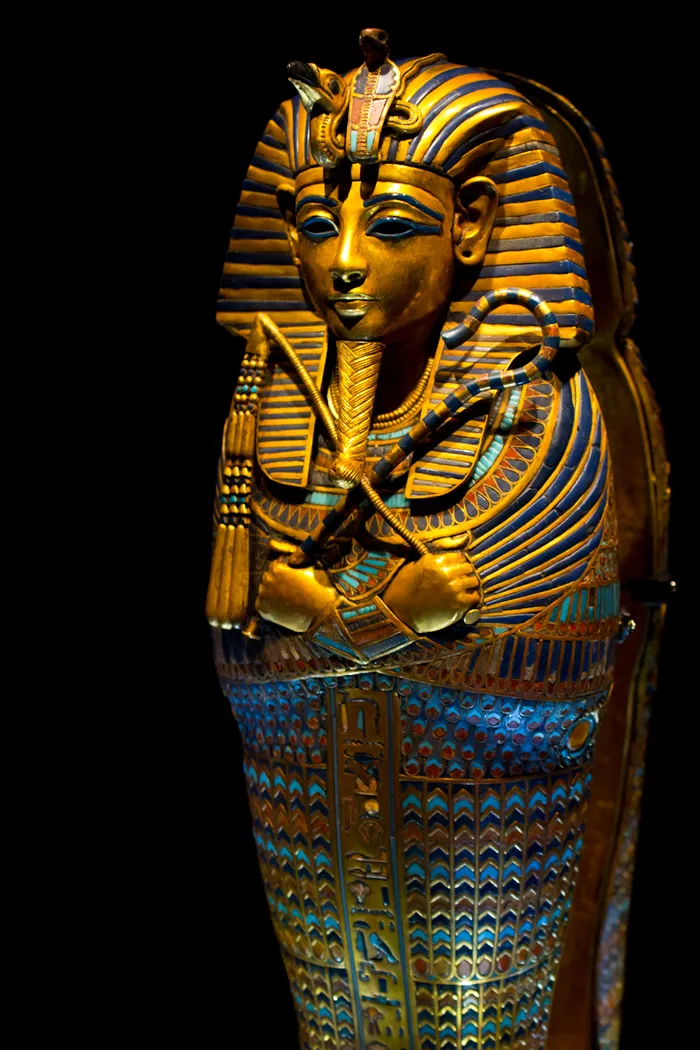
The beard on the burial mask of King Tutankhamun, the boy pharaoh who ruled Egypt from 1332 to 1323 B.C., was hastily glued back on with epoxy after being knocked off during cleaning, according to conservators at the Egyptian Museum in Cairo.
The mask, which is more than 3,300 years old, is displayed with other contents of King Tut's tomb in an unprotected exhibit at the museum. Conservators disagree over whether the beard was knocked off by accident or removed because it was loose, according to the Associated Press, which first reported the story.
Either way, a museum staff member used epoxy glue to repair the burial mask, which damaged the artifact. [In Photos: The Life and Death of King Tut]
"Unfortunately, he used a very irreversible material — epoxy has a very high property for attaching and is used on metal or stone, but I think it wasn't suitable for an outstanding object like Tutankhamun's golden mask," one conservator told the AP.
The mask should have been taken to the conservation lab, but the staff member used the irreversible substance because he was in a rush to put it back on display. The object now has a gap between the face and the beard, filled with a layer of transparent yellow, the conservator said.
The conservators reportedly spoke on condition of anonymity because they feared professional reprisals.
Another staff member who was present during the repair said some of the epoxy had dried on the mask's face, and a colleague left scratches while trying to remove the glue with a spatula.
Get the world’s most fascinating discoveries delivered straight to your inbox.
British archaeologists Howard Carter and George Herbert discovered the famed pharaoh's mask in 1922, along with the king's nearly intact tomb. The discovery sparked rumors of a curse that caused many of those linked to the tomb's opening to die mysteriously, but in fact most of the deaths had rational explanations.
Egypt's tourism industry is still recovering from the 2011 political unrest that led to the overthrow of autocratic leader Hosni Mubarak. No major improvements have been made to the Egyptian Museum since it was built in 1902, and authorities have not yet revealed plans to move the King Tut exhibit to the new Grand Egyptian Museum, which is scheduled to open in 2018, the AP reported.
Follow Tanya Lewis on Twitter. Follow us @livescience, Facebook & Google+. Original article on Live Science.
