













Forecasters Predict Fewer Hurricanes

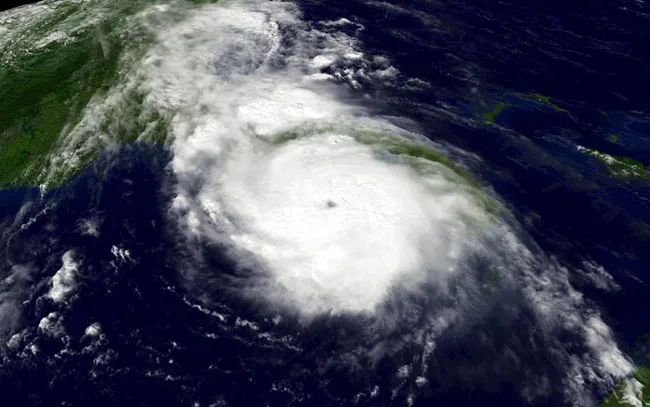
Fewer hurricanes will form in the Atlantic basin this season than was predicted earlier this year, according to a new forecast released today by a well-known Colorado State University forecasting team.
The latest forecast by William Gray's team predicts only 15 named storms to form in the Atlantic, with eight of those becoming hurricanes. Four of the hurricanes are expected to develop into major storms (Categories 3, 4 and 5 on the Saffir-Simpson scale) with wind speeds of 111 mph or greater.
An earlier forecast released by the team in April predicted 17 named storms to form, with nine becoming hurricanes (five major hurricanes).
The reduction in the hurricane number is due to cooler than expected temperatures in the Atlantic basin, though the season is still expected to be an active one compared to the average hurricane season, the team said.
"We expect the Atlantic basin tropical storm season will be active with activity that is about 160 percent of the long-term average," said forecaster Gray. "As always, residents should take precautions during hurricane season and be prepared."
Though it is now August, the 2007 hurricane season has been fairly quiet so far, with only three named storms--the third, Tropical Storm Chantal, formed just three days ago.
The first storm, Subtropical Storm Andrea, formed before the official beginning of the season, but did not make landfall.
Get the world’s most fascinating discoveries delivered straight to your inbox.
Tropical Storm Barry crossed the Florida peninsula from west to east and traveled up the East Coast between June 1 and 2.
"The number of storms that formed during June and July isn't relevant to this newest forecast - we've lowered our forecast from our May predictions because of slightly less favorable conditions in the tropical Atlantic," said forecaster Philip Klotzbach. "Sea surface temperature anomalies have cooled across the tropical Atlantic in recent weeks, and there have been several significant dust outbreaks from Africa, signifying a generally stable air mass over the tropical Atlantic."
According to the forecast team, there is a 68 percent chance of an intense hurricane hitting somewhere along the U.S. coastline during the remainder of this hurricane season.
Despite inaccurate forecasts for the 2006 season (in which several groups predicted an active hurricane season but only 10 named storms formed, five of which were hurricanes), forecasters say that there is still plenty of time for hurricanes to form because the most active months of the hurricane season, which runs from June 1 to November 30, are August and September.
- 2007 Hurricane Guide
- Natural Disasters: Top 10 U.S. Threats
- When a Hurricane Approaches, Should I Open the Windows or Tape Them?

Andrea Thompson is an associate editor at Scientific American, where she covers sustainability, energy and the environment. Prior to that, she was a senior writer covering climate science at Climate Central and a reporter and editor at Live Science, where she primarily covered Earth science and the environment. She holds a graduate degree in science health and environmental reporting from New York University, as well as a bachelor of science and and masters of science in atmospheric chemistry from the Georgia Institute of Technology.