













Where are All the Hurricanes?

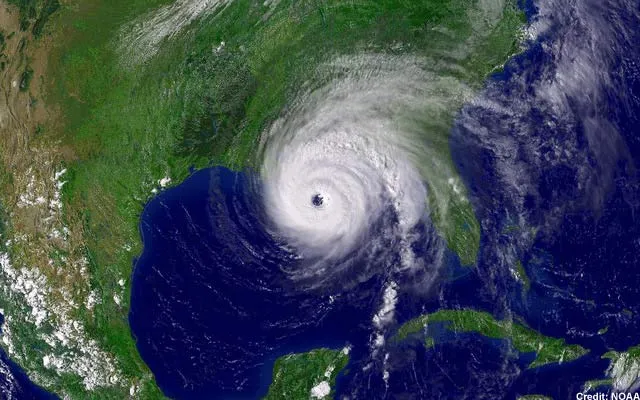
Forecasts for a busy hurricane season in 2006 were all dead wrong. This year, forecasters predicted a really busy year again. But with just two storms to date, and neither one a hurricane, you might wonder where all the action is.
Be patient, history suggests.
“June storms are not unusual, but… we’re in the relatively quiet part of the hurricane season,” said Dennis Felgen, a meteorologist and spokesman for the National Hurricane Center.
Though hurricane season begins on June 1, the stormiest months tend to be August and September, when conditions in the Atlantic basin are most ripe for a hurricane to develop. During these months, ocean temperatures are warmer and there is typically less wind in the upper atmosphere to shear the tops off of developing storms.
Some seasons have seen unusually late starts. The 1992 season, for example, didn’t start up until August. And boy did it start with a bang: Hurricane Andrew decimated South Florida.
“But this season isn’t unusually late,” Felgen told LiveScience. “We’re dead-on here.”
In fact, this year got off to an unusually early start. On May 9, Subtropical Storm Andrea made a pre-season surprise appearance, but quickly dissipated. Tropical Storm Barry followed, but also lasted only a couple of days.
Get the world’s most fascinating discoveries delivered straight to your inbox.
Forecasters have predicted that 17 named storms will form in the Atlantic this year, with nine of those becoming hurricanes. Five of those hurricanes are expected to be major hurricanes (Categories 3, 4 and 5 on the Saffir-Simpson scale).
A similarly busy forecast was given for the 2006 season, but ultimately it flopped. El Nino conditions that fostered wind shear are thought to have stymied hurricane development.
The next storm to form this season, which runs officially through Nov. 30, will be named Chantal.
- 2007 Hurricane Guide
- Natural Disasters: Top 10 U.S. Threats
- When a Hurricane Approaches, Should I Open the Windows or Tape Them?

Andrea Thompson is an associate editor at Scientific American, where she covers sustainability, energy and the environment. Prior to that, she was a senior writer covering climate science at Climate Central and a reporter and editor at Live Science, where she primarily covered Earth science and the environment. She holds a graduate degree in science health and environmental reporting from New York University, as well as a bachelor of science and and masters of science in atmospheric chemistry from the Georgia Institute of Technology.