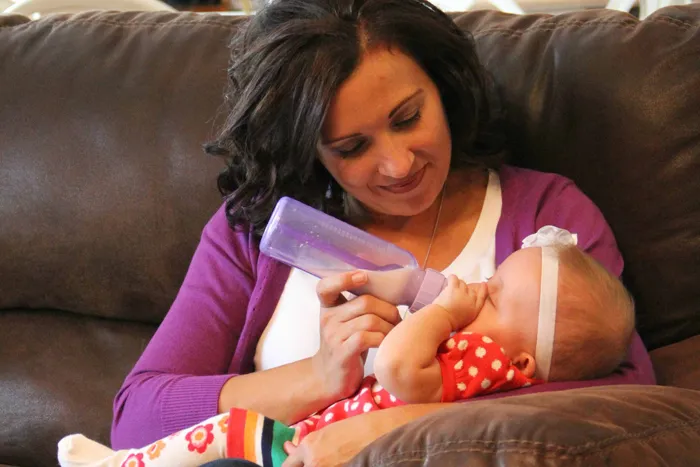
After being diagnosed with cervical cancer, Danielle Hargraves of Zanesville, Ohio, thought she may never be able to have another baby. But thanks to a special surgical technique at Ohio State's James Cancer Hospital and Solove Research Institute and Comprehensive Cancer Center, doctors were able to preserve Danielle's fertility. Three years after her diagnosis of cervical cancer, she is a mother for the second time. Details on her story are at: bit.ly/15t64Xy.
(Image credit: Ohio State University Comprehensive Cancer Center.)
More women than ever are choosing to have babies over the age of 30, and for some that creates medical challenges. For example, the risk of cervical cancer tends to steadily climb past the age of 30, meaning more doctors are now having to simultaneously treat cancer while working to preserve a woman's womb.
Although the human papillomavirus (HPV) vaccine, pap smears and increased public awareness have reduced cervical cancer rates in the United States, the disease still affects at least 13,000 women annually — many of them in their childbearing years. The average age of cervical cancer patients is the early 40s, so many women are younger than that and may not have started their families yet.
In the past, women diagnosed with cervical cancer had two primary treatment options: A radical hysterectomy — removing the uterus, cervix and part of the vagina — or radiation therapy to the pelvis. Both treatment options eliminated a woman's ability to become pregnant.
If you're a topical expert — researcher, business leader, author or innovator — and would like to contribute an op-ed piece, email us here.
The OSUCCC-James gynecologic oncology team offers a minimally invasive procedure known as a radical trachelectomy to preserve a woman's ability to conceive post treatment. Unlike traditional hysterectomies, the procedure only requires a fraction of the woman's reproductive tract tissue be removed, preserving her ability to get pregnant after surgery. The cervix and upper part of the vagina are removed, but the rest of the uterus is left in place. Then a permanent suture is put in where the cervix used to be so that the uterus can help maintain a future pregnancy. Physicians might also take out the lymph nodes in the pelvis to determine if the cancer has spread.
About 70 percent of the women who have had this procedure nationwide and then attempted to become pregnant have been successful. But, the procedure is only appropriate for certain women with early stage, localized disease.
With this procedure, I always inform potential candidates that there is a risk of miscarriage. And, any future pregnancies will require that the baby be delivered via a Cesarean section, otherwise there is a risk of bleeding.
Sign up for the Live Science daily newsletter now
Get the world’s most fascinating discoveries delivered straight to your inbox.
Doctor Jeffrey Fowler, M.D., specializes in treating women for cervical cancer while preserving their ability to get pregnant after therapy. Fowler is part of a team at Ohio State's James Cancer Hospital and Solove Research Institute and Comprehensive Cancer Center that performs a special fertility-sparing operation known as a radical trachelectomy. Details on the procedure are at bit.ly/15t64Xy.
(Image credit: Ohio State University Comprehensive Cancer Center.)
For women who qualify for the procedure, it can be the best of both worlds, and that's what we physicians are aiming for: Cancer eradication and enhanced quality of life. It used to be that this procedure was only offered in countries outside the United States, but now there are more options for American women to not only treat the cancer but also have the potential to have a baby in the future.
The views expressed are those of the author and do not necessarily reflect the views of the publisher. This version of the article was originally published on Live Science.