













Earthquake Hits off Japan's Coast

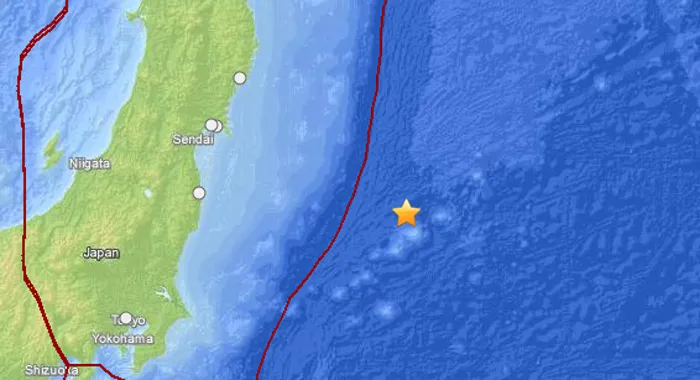
A strong earthquake of preliminary magnitude 7.3 struck off the coast of Japan today, according to the U.S. Geological Survey (USGS).
The temblor prompted the Japan Meteorological Agency to issue a tsunami advisory for the east coast of Fukushima prefecture, forecasting that the sea level could rise up to 3 feet, or 1 meter, though no damage was expected.
The earthquake's epicenter was 203 miles (326 kilometers) east of Namie, Japan, and 295 miles (475 km) east-northeast of Tokyo. It originated 6.2 miles (10 km) deep and struck at 3:10am Saturday morning local time (17:10 Friday UTC), the USGS reports.
On March 11, 2011, a much more powerful magnitude-9 earthquake struck closer to the shore of the same region of northeastern Japan. The so-called Tohoku earthquake unleashed a devastating tsunami and left more than 15,000 dead.
Earthquakes of the size of the one that struck today can cause significant damage, especially with poorly built structures. Even well-designed buildings can be damaged or, in some cases, destroyed depending on the severity of the quake and a building's proximity to the epicenter.
But the damage caused by any single event depends on the quake's depth, proximity to populated areas, building standards in the region, as well as the type of earthquake. The USGS frequently updates the magnitude of an event after more data is analyzed.
An earthquake's magnitude is a measure of the energy released at the source. It is just one predictor of the shaking that may ensue, which is affected by local and regional geology. Scientists know in a general sense what causes Earthquakes but are unable to predict specific quakes.
Get the world’s most fascinating discoveries delivered straight to your inbox.
This article will be updated if significant additional information becomes available. Find more earthquake news here.

For the science geek in everyone, Live Science offers a fascinating window into the natural and technological world, delivering comprehensive and compelling news and analysis on everything from dinosaur discoveries, archaeological finds and amazing animals to health, innovation and wearable technology. We aim to empower and inspire our readers with the tools needed to understand the world and appreciate its everyday awe.