













Worms Tell a Tale of How Nerves Develop

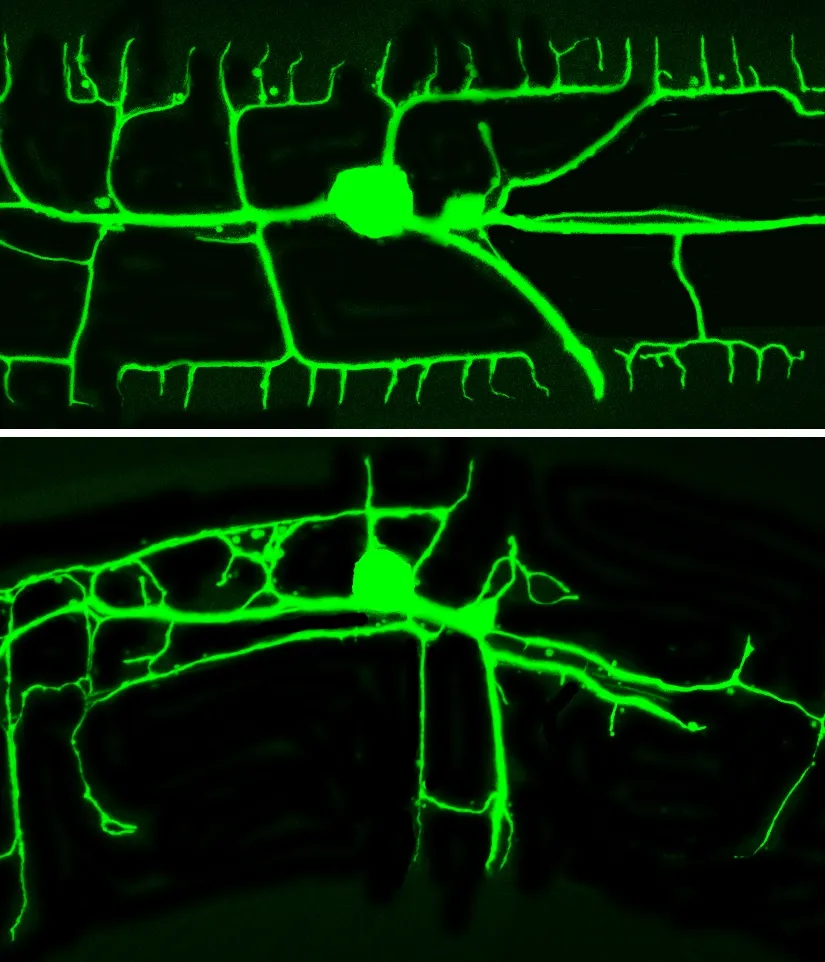
How nerve cells branch out and develop is a somewhat mysterious process, but a new study reveals how at least some of these nerves reach their target.
Nerve cells throughout the body form treelike structures known as dendrites that sense input from their environment and relay it to the nervous system. Now, researchers have found a protein in the skin of roundworms (Caenorhabditis elegans) that attracts growing dendrites, and the same protein may be present in humans.
Decades ago, scientists found a link between defects in dendrite development and neurological diseases such as Alzheimer's and schizophrenia. Understanding how these defects form in roundworms could offer insight into these disorders in humans. [Living With Alzheimer's in the US (Infographic)]
"I cannot imply we will understand Alzheimer's disease now, but it's not impossible that related mechanisms are also acting in humans," said study researcher Hannes Buelow, a geneticist at Albert Einstein College of Medicine in New York.
To understand how dendrites form, Buelow and his team focused on roundworms, which are frequently used as models in genetics studies because the tiny animals are so easy to work with. The researchers performed a genetic screen to look for mutations that led to defective dendrites on pain-sensing cells, known to cover nearly the entire worm in a weblike structure.
The analysis revealed a gene for a protein manufactured in the worm's skin that controls proper dendrite branching. They called the protein menorin, because it leads to dendrites that resemble a menorah.
Using transgenic methods, the researchers inserted a normal copy of the menorin gene into the defective worms, and found it restored proper dendrite development on the pain-sensing cells, but only if the gene was inserted into skin cells.
Get the world’s most fascinating discoveries delivered straight to your inbox.
The findings were exciting for two reasons, Buelow said. First, the gene turned out to exist in other animals, including humans. Until now, this gene hadn't been studied in any organism, Buelow said. And second, this was the first evidence that target signals from the skin were controlling dendrites. The only other example of this kind of signaling involves a class of proteins called neurotrophins, which are involved in neuron growth in the brain.
The findings are detailed today (Oct. 10) in the journal Cell.
Follow Tanya Lewis on Twitter and Google+. Follow us @livescience, Facebook & Google+. Original article on LiveScience.
