Doo-Doo Delicacy: World's Priciest Coffee Put to Test

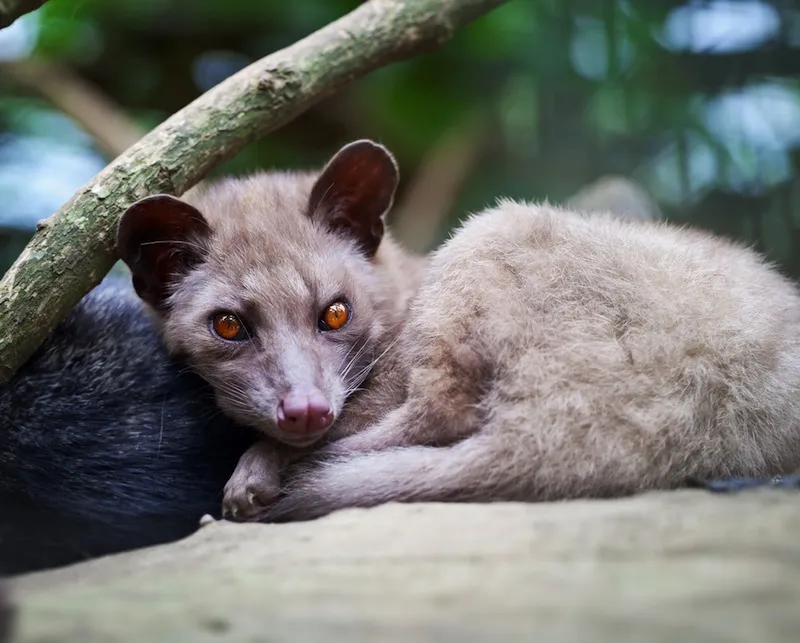
A new method can determine whether the world's most expensive coffee — which comes from ingredients pooped out by a weasellike creature — is authentic.
At $150 to $227 per pound, Kopi Luwak is the world's costliest coffee. Its origin lies in coffee berries eaten and excreted by a slender mammal known as the Asian palm civet (Paradoxurus hermaphroditus). "Kopi Luwak" are the Indonesian words for coffee and civet, respectively. Coffee beans, the seeds of coffee berries, are then collected from the animal's dung, and are washed, fermented, sundried and roasted.
Currently, no reliable, standardized method exists to distinguish real Kopi Luwak beans from fake ones. The coffee's price has made it an inviting target of fraud, with ordinary coffee sold as Kopi Luwak, or real Kopi Luwak adulterated with cheap beans. [10 Surprising Facts About Coffee]
To verify the authenticity of this delicacy, researchers sought to find out what chemicals set Kopi Luwak apart from other forms of coffee. They ground, dissolved and vaporized regular and Kopi Luwak coffee beans gathered from all over Indonesia, bubbled the resulting gas through silicone oil, and electrified and fragmented their molecules to identify them.
The researchers found Kopi Luwak was rich in citric acid and malic acid. "Citric and malic acid are responsible for fruity aromas — citrus and apple aromas, respectively," said researcher Sastia Putri, a biotechnologist at Osaka University in Japan. The researchers speculated that the acids, enzymes and microbes that digest the beans in the palm civet's gut "play a key role in the enhanced levels of citric acid and malic acids."
By conducting experiments to discover the unique chemical fingerprint of Kopi Luwak, the researchers could distinguish pure Kopi Luwak from Kopi Luwak that was mixed with cheaper coffee.
"This is a key stepping stone for development of a robust authentication protocol that can be used as a standard for Kopi Luwak authentication," Putri told LiveScience. "In particular, this will be useful for our partner, the Indonesian Coffee and Cocoa Research Institute. They currently issue authentication certificates for Kopi Luwak producers."
Get the world’s most fascinating discoveries delivered straight to your inbox.
The researchers also want to analyze various grades of Kopi Luwak to determine which compounds are important for specific flavors in Kopi Luwak. "Once we know the methods that are important for Kopi Luwak quality, we can then aid Kopi Luwak producers to produce an even higher quality of Kopi Luwak," Putri said.
The scientists detailed their findings in the Aug. 21 issue of the Journal of Agricultural and Food Chemistry.
Follow LiveScience @livescience, Facebook & Google+. Original article on LiveScience.