













NASA Drones Will Watch Hurricanes from Birth

Starting next month, NASA will remotely pilot two high-flying aircraft into the Atlantic Ocean's hurricane nursery to track tropical cyclones from birth.
The Hurricane and Severe Storm Sentinel (H3) research mission, now in its second of five years, is part of an effort to reveal the environmental and internal factors that control storm growth, and thus improve hurricane prediction. The twin Global Hawk drones will fly over and around tropical storms and hurricanes from the storms' source in the East Atlantic Ocean until the cyclones collapse weeks later in the western part of the basin.
Thanks to the drones, "we can get the storms we normally couldn't get," Scott Braun, the mission's principal investigator and a research scientist at NASA's Goddard Space Flight Center in Greenbelt, Md., said during a Google+ hangout today. [9 Totally Cool Uses for Drones]
Hurricanes in this region arise from tropical storms that form in the tropical Atlantic Ocean. Warm, moist air evaporating from the ocean creates a circular flow, sparking a rotating storm.
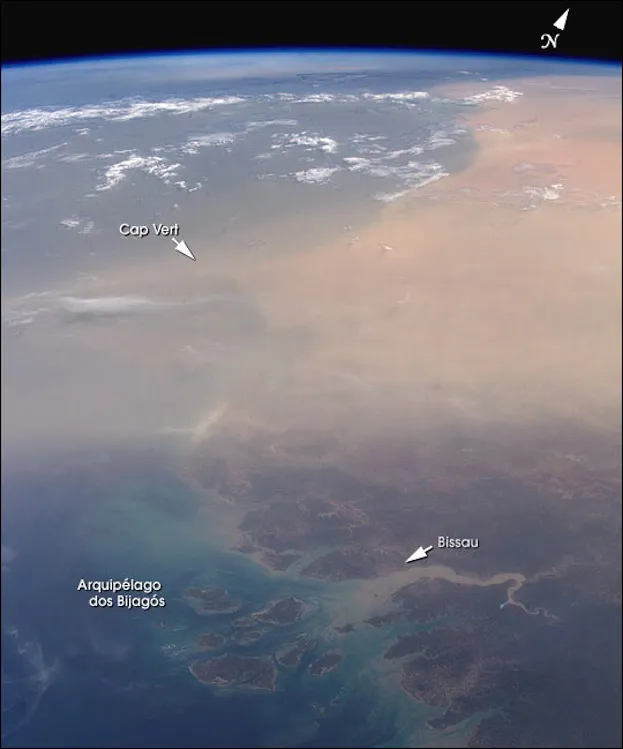
Until the Global Hawks were added to NASA's arsenal, research planes from the United States couldn't reach the Eastern Atlantic Ocean. There, many hurricanes are born when disturbances move off the west coast of Africa and out over the ocean. NASA's unmanned aircraft can fly for up to 30 hours, depending on how much weight they carry, and are piloted in shifts by controllers back on the ground.
Researchers are especially interested in how hot, dry and dusty Saharan air affects budding storms, Braun said. Data collected by the drones last summer suggests the arid air may suppress storm formation, but other studies indicate the strong winds heading east from Africa may give swirling storms an extra kick.
"The dry air coming off Africa is a huge mystery," said Brian McNoldy, a weather researcher at the University of Miami, who is not involved in the mission. "Being able to get wind fields from storms in the far Eastern Atlantic is something we've never been able to do," McNoldy said during the hangout.
Get the world’s most fascinating discoveries delivered straight to your inbox.
The Global Hawk drones will join manned research planes flown by the National Oceanic and Atmospheric Administration (NOAA) and the U.S. Air Force in monitoring hurricanes, Braun said. "We plan to collaborate with them to fly together or fly in series, so we can maintain as continuous a coverage of a storm as we possibly can," he said. In 2010, six planes from NASA, the NOAA and the Air Force flew together to track Hurricane Karl.
One of the upcoming remotely piloted planes will release dropsondes, disposable weather recording devices that send back real-time data for forecasting. Another will carry a detector to look for gamma-ray bursts, the electrical discharges known as dark lightning. Other instruments will track rainfall, wind speed, temperature, humidity and more.
Email Becky Oskin or follow her @beckyoskin. Follow us @OAPlanet, Facebook & Google+. Original article on LiveScience's OurAmazingPlanet.
