














See the Severe Storm Walloping the East

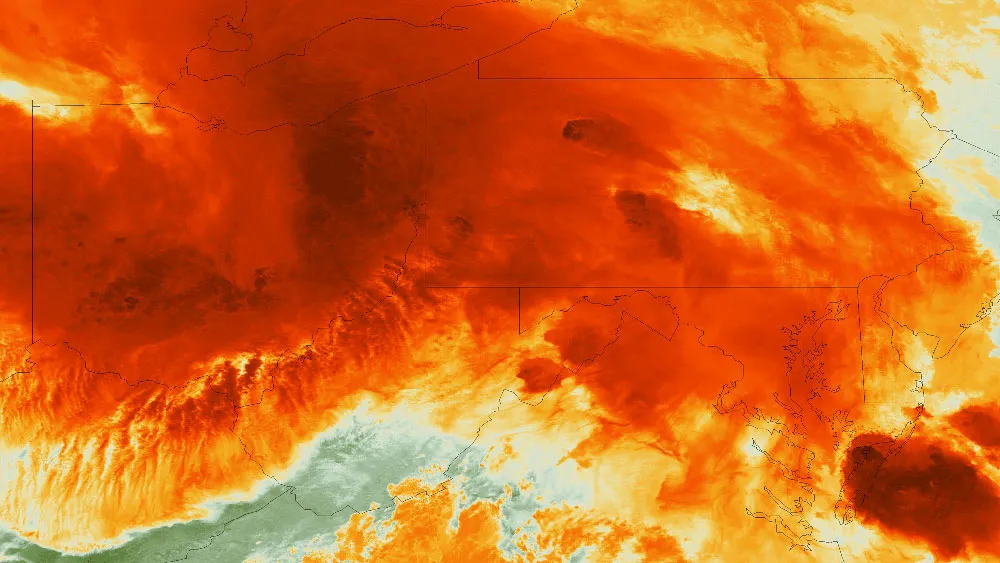
After sweeping across the Midwest yesterday evening and overnight, a severe storm system has descended on the Mid-Atlantic and Northeast, bringing bolts of lightning and more rain to an already soaked region.
The Suomi NPP satellite snapped an infrared image of the raging storm when it passed overhead at 3 a.m. EDT today (June 13), just when the most intense parts of the system were reaching the spot where Ohio, West Virginia and Pennsylvania come together. The darker the red in the image, the more intense the part of the storm is.
The system has already generated more than 300 storm reports, which include reports of tornadoes touching down, hail and strong winds, according to data collected by the National Oceanic and Atmospheric Administration's Storm Prediction Center. Most of the tornado reports came from Iowa.
Follow Andrea Thompson @AndreaTOAP, Pinterest and Google+. Follow OurAmazingPlanet @OAPlanet, Facebook and Google+.
Get the world’s most fascinating discoveries delivered straight to your inbox.

Andrea Thompson is an associate editor at Scientific American, where she covers sustainability, energy and the environment. Prior to that, she was a senior writer covering climate science at Climate Central and a reporter and editor at Live Science, where she primarily covered Earth science and the environment. She holds a graduate degree in science health and environmental reporting from New York University, as well as a bachelor of science and and masters of science in atmospheric chemistry from the Georgia Institute of Technology.