













Dentist's Chair Good Place for Medical Checkup, Study Says
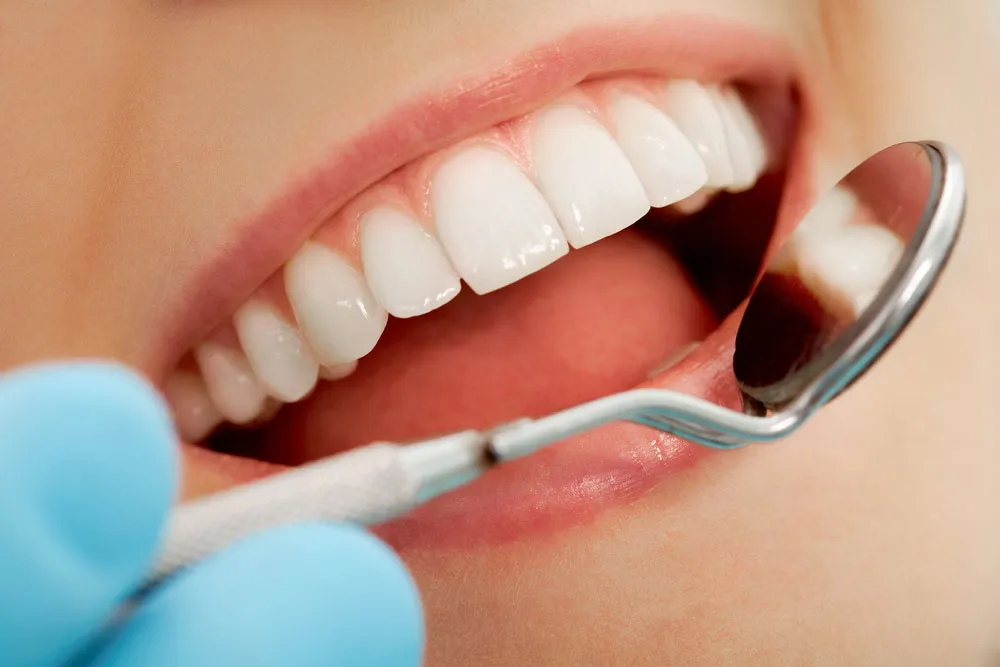
During a future visit to your dentist, it might not be only your teeth that are checked out.
A new study shows that 20 million Americans each year see a dentist but not a general health care provider. The finding suggests dental offices could be good places to screen patients for chronic health problems. By asking their patients a few questions or administering quick health test, dentists could identify those who are at risk for diseases such as diabetes.
"The dental office might be a really good venue for identifying or screening for diseases. The dentist, in turn, could refer patients to a primary care provider for further workup," said Shiela Strauss, a professor at New York University College of Nursing who was lead author of the study.
The results are published today (Dec. 15) in the American Journal of Public Health.
Annual office visits
Strauss spearheaded the study of Americans' medical appointments while researching ways to detect undiagnosed cases of diabetes. The American Diabetes Association estimates 7 million Americans have undiagnosed diabetes, and 79 million others have prediabetes, which can advance to diabetes when left untreated.
People with diabetes are at higher risk than the general population for gum diseases, and Strauss said she thought this might mean that patients with undiagnosed diabetes at least would be seeing their dentists.
Get the world’s most fascinating discoveries delivered straight to your inbox.
Strauss and her colleagues used data from the U.S. Department of Health & Human Services' 2008 National Health Interview Survey, which questioned people about their health care habits. They chose a subsample of 31,262 adults and children.
Among adults surveyed, one quarter did not see a primary care provider. But of that group, one quarter visited a dental office.
Among children, a similar percentage missed out on primary care, but a third of those saw a dentist.
Projected nationally, that would mean 7 million children and 13 million adults saw only a dentist, the study said. The vast majority of them had some form of health insurance, suggesting money was not a barrier.
Strauss said along with diabetes, dentists also might screen people for obesity, high blood pressure and substance abuse.
"This isn't about diagnosis," she said. "This screening could be as simple as the patient completing a questionnaire in the dentist's office," and the dentist recommending the patient see his or her primary care provider.
Getting dentists onboard
Getting dentists to screen patients for such health conditions might not be easy. "The dental world and the medical world are separated by a fairly large chasm right now," said Andrei Barasch, chairman of dental medicine at Winthrop University Hospital in New York.
But Barasch, like Strauss, thinks this chasm should be closed. "This paper will be a boon to our case, simply because it's evidence as to how much help dentists could provide. We're talking about millions of people here," Barasch said. "Diseases could be detected earlier; patients could be brought into the medical system earlier."
Barasch acknowledged there are barriers to bringing screening programs to dental offices. Dental education has changed little over the past decades, and instructors are hesitant to add courses that seem off-topic to oral health, he said. Moreover, insurance companies don't reimburse dentists for the extra time they spend screening patients' general health. Both these tendencies need to change, he says.
"The sooner we can have data to prove that the dental office is a suitable health care setting for detecting disease, the sooner we can overcome these barriers," said Barasch, who has been leading a study on administering blood sugar tests in dental offices to screen for diabetes. His results, which he said could build a stronger case for such tests by dentists, are forthcoming.
Pass it on: Screening patients for chronic health problems at the dentist's office could catch diseases early and be a boon to public health.
Follow MyHealthNewsDaily on Twitter @MyHealth_MHND