













The Fascinating History of Urine Tests
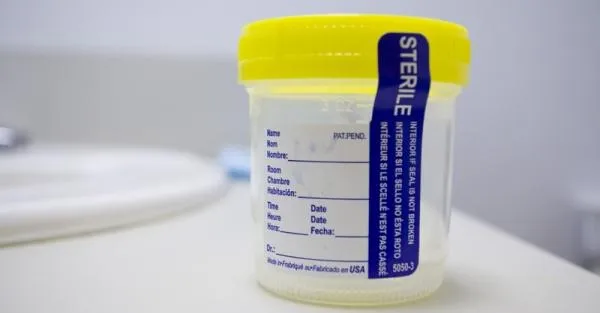
To a doctor, urine can provide much information. One way for doctors to find out what's going on inside the body is to examine what flows out of it. So don't be surprised the next time a doctor asks for a urine sample for a seemingly non-urinary complaint.
In fact, be a little proud. When you hand over that little cup, you're participating in a medical tradition more than 6,000 years in the making.
Ancient Babylonian and Sumerian physicians first inscribed their evaluations of urine into clay tablets as early as 4,000 B.C.
Later, in ancient Greece, Hippocrates, often called the father of Western medicine, expanded on urine's importance: "No other organ system or organ of the human body provides so much information by its excretion as does the urinary system," he wrote.
By the late middle ages, the study of urine had solidified into the practice known as uroscopy. Medieval doctors associated nearly every known disease with urinary characteristics , and some would diagnose patients without even meeting them just by examining a bottle of their urine.
Uroscopy was commonplace, and it shows up in Shakespeare's writings. In Henry IV, when Falstaff asks "What says the doctor to my water?" He's not just asking about his urinary health; because urine was so central to medicine at that time, he was effectively asking for the results of his entire checkup.
Although many uroscopy tests done in those times have been discredited, certain tests are still done today because they accurately indicate health problems, said Eric Wallen, a professor of urology at the University of North Carolina. "Malodorous urine is accurately classified as infected, red urine still notable for the presence of blood, [and] brown urine for bilirubin or blood products," Wallen said.
Get the world’s most fascinating discoveries delivered straight to your inbox.
"But it would be a rare physician today who [only] utilized this form of analysis," Wallen said, and it would be especially rare to find one still "tasting the urine to diagnose diabetes ."
- 10 Medical Myths That Just Wonâ??t Go Away
- 5 Experts Answer: Is There Such Thing as a Healthy Juice Cleanse?
- Infographic: How Radiation Affects the Human Body
Follow MyHealthNewsDaily on Twitter @MyHealth_MHND. Like us on Facebook.