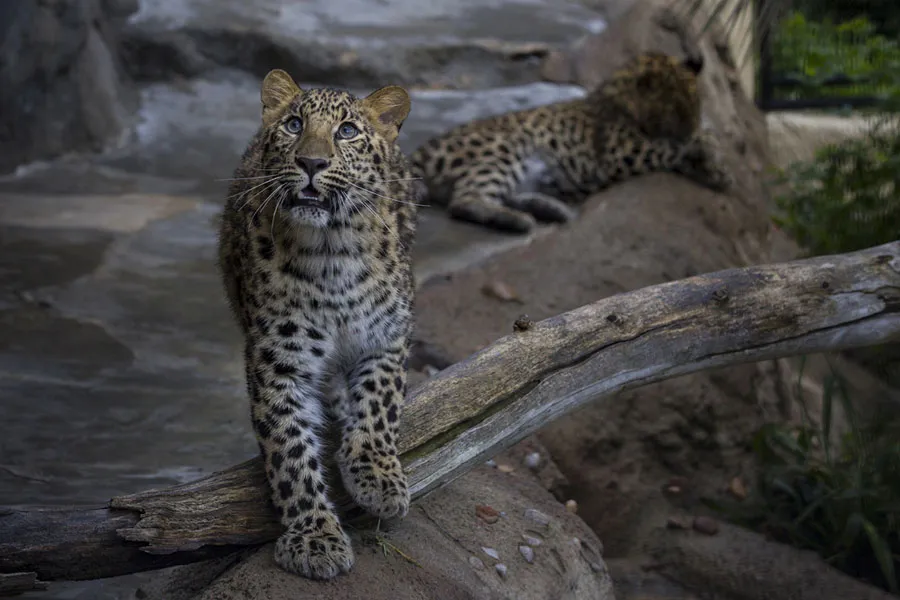
Amur Leopards Explore New Zoo Home
Get the world’s most fascinating discoveries delivered straight to your inbox.
You are now subscribed
Your newsletter sign-up was successful
Want to add more newsletters?
Delivered Daily
Daily Newsletter
Sign up for the latest discoveries, groundbreaking research and fascinating breakthroughs that impact you and the wider world direct to your inbox.
Once a week
Life's Little Mysteries
Feed your curiosity with an exclusive mystery every week, solved with science and delivered direct to your inbox before it's seen anywhere else.
Once a week
How It Works
Sign up to our free science & technology newsletter for your weekly fix of fascinating articles, quick quizzes, amazing images, and more
Delivered daily
Space.com Newsletter
Breaking space news, the latest updates on rocket launches, skywatching events and more!
Once a month
Watch This Space
Sign up to our monthly entertainment newsletter to keep up with all our coverage of the latest sci-fi and space movies, tv shows, games and books.
Once a week
Night Sky This Week
Discover this week's must-see night sky events, moon phases, and stunning astrophotos. Sign up for our skywatching newsletter and explore the universe with us!
Join the club
Get full access to premium articles, exclusive features and a growing list of member rewards.
Three 11-month-old Amur leopards have been tirelessly exploring their new exhibit at the San Diego Zoo since making their debut last weekend.
In a picture taken yesterday (April 12), one of the leopard siblings looks for something to climb on while one of its two siblings relaxes in the background.
Amur leopards are a critically endangered species, with only about 40 individuals though to exist in the wild. They are found mostly in the Russian Far East, in cold, high-elevation habitats. A new park intented to conserve the species was announced earlier this week by the conservation group WWF and covers about 60 percent of the leopards' habitat. Human encroachment on the species' habitat has been a large cause in its population declines.
About 300 Amur leopards exist in zoos around the world, and they, like the trio at the San Diego Zoo, are part of an effort to breed and conserve the species.
Get the world’s most fascinating discoveries delivered straight to your inbox.