
















Why Is Texas Getting All the Snow?
What do Chicago, New York City, Minneapolis and Boston have in common this winter? They all have had less snow than Midland, Texas.
The lower 48 states have had a wimpy winter, but with a few snow oddities. Perhaps the oddest of all: Midland has seen a whopping 19.5 inches (49.5 centimeters) of snow so far this year. That's more than double the snow total for New York City or Boston this winter, and even tops a few of the big boys of snow from the Midwest.
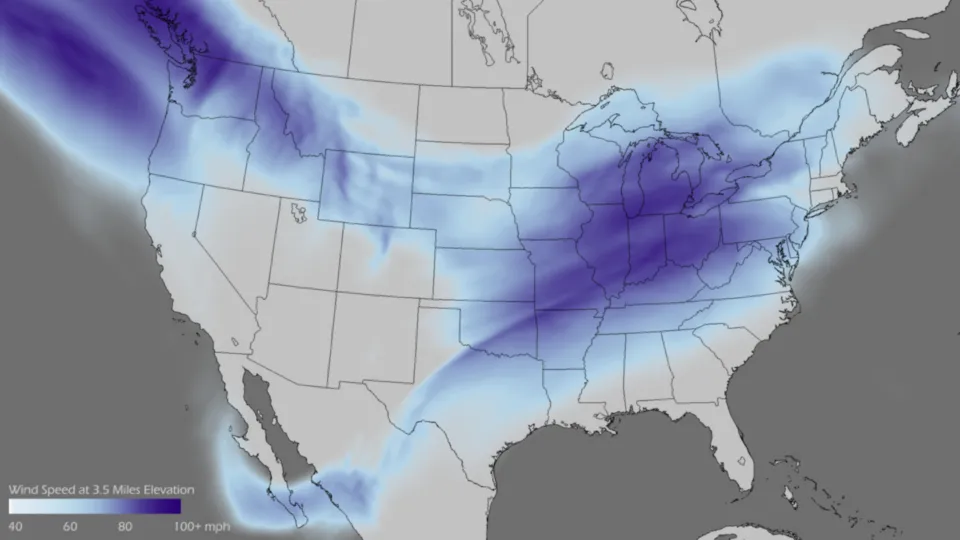
This year's active La Niña pattern, a cooling of the waters of the equatorial Pacific, would usually mean dry conditions for west Texas. But not this year. Jets of air that dip down from the Arctic — almost like rivers in the atmosphere — have split in two. One of these cold jets has dipped far south in a phenomenon called a "southern stream split," overwhelming that dry pattern this year.
A southern stream split develops when "the main polar jet splits, and digs out to the south on the southern split, and storm systems develop," said Greg Murdoch of the National Weather Service office in Midland. The southern stream split has carried low-pressure systems into west Texas, bringing cold air and snow.
The northern branch of the split has carried the cold air farther north of the typically snowy cities in the United States, so they've been too warm to see much snow. Some of these big cities' snowfalls look even tinier when compared to last year's.
Boston has had 7.8 inches (19.8 cm) of snow so far this winter, versus 81 inches (206 cm) all last winter and 45 inches (114 cm) on average for winter over the past 30 years.
New York City has had 7.4 inches (18.8 cm) of snow this winter, versus 62 inches (157 cm) last winter. The city's 30-year average is 2 inches (5 cm) a winter.
Get the world’s most fascinating discoveries delivered straight to your inbox.
Chicago has had 15.7 inches (40 cm) this year, compared with 57.9 inches (147 cm) last year. Minneapolis has had 17.2 inches (43.7 cm), compared with 86.6 inches (220 cm) last year.
In Washington, D.C., just 2 inches (5 cm) of snow has fallen so far this winter, versus 10 inches (25 cm) last year.
Last year, Midland, Texas, had 3 inches (7.6 cm) of snow. The city's 30-year average is 4.8 inches (12.2 cm).
You can follow OurAmazingPlanet staff writer Brett Israel on Twitter: @btisrael. Follow OurAmazingPlanet for the latest in Earth science and exploration news on Twitter @OAPlanet and on Facebook.