














Sweating it: What the Heat Index Tells Us

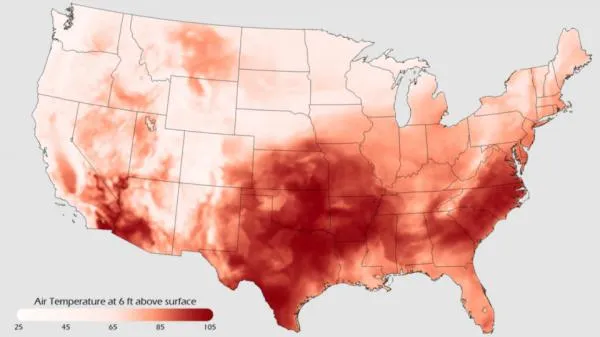
The heat index in Knoxville, Iowa, hit a mind-boggling 131 degrees Fahrenheit (55 degrees Celsius) yesterday (July 18).
That doesn't mean that thermometers were bursting in Iowa. The heat index goes beyond the reading on the thermometer and tells people how hot it really feels outside.
The index combines air temperature and relative humidity, and is sometimes called the felt air temperature.
The heat index is often used to warn people during dangerously hot days. That's because hot weather is the No. 1 weather-related killer in the United States, according to the National Weather Service. The NWS will issue heat alerts when the heat index is expected to exceed 105 to 110 F (40.5 to 43.3 C).
Across the country today (July 19), more than 78 million people are under a heat advisory or warning, according to the U.S. National Oceanic and Atmospheric Administration. [Related: When Will the Horrible Heat Wave End? ]
So why does it feel even hotter when it's humid out? When the temperature and humidity are high, the body has a hard time cooling itself.Humans get rid of heat by sweating, which cools the body through evaporation. However, high relative humidity blocks evaporation, robbing the body of its ability to cool itself.
When heat gain exceeds the level the body can remove, body temperature begins to rise, and heat-related illnesses and disorders may develop. In the disastrous heat wave of 1980, more than 1,250 people died. In the heat wave of 1995, more than 700 deaths in the Chicago area were attributed to the high temperatures. In August 2003, a record heat wave in Europe claimed an estimated 50,000 lives.
Get the world’s most fascinating discoveries delivered straight to your inbox.
One caveat to the heat index is that the numbers are for shady, light wind conditions. When standing in direct sunlight, heat index values can jump by up to 15 F (8.3 C), according to the NWS.
