














Tropical Storm Bret to Wind Down

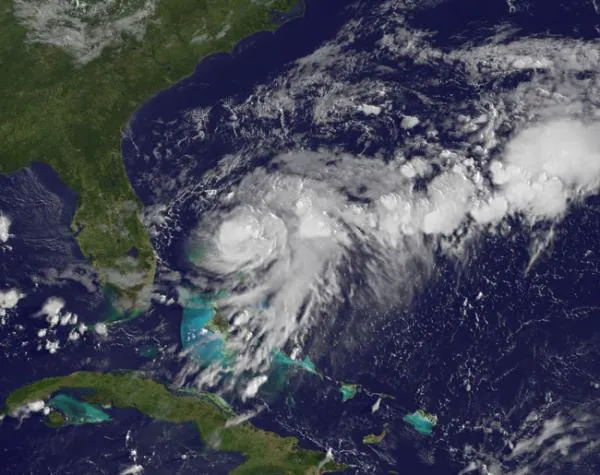
A NASA satellite caught a glimpse of Tropical Storm Bret as it swirled over the Bahamas.
Tropical Storm Bret was born in the northwestern Bahamas and after intensifying earlier this week, is now beginning to weaken. Bret is the second named storm (tropical storms and hurricanes receive names) to form during the 2011 Atlantic hurricane season, which began on June 1. Tropical Storm Arlene formed in the Gulf of Mexico in late June. NASA's GOES-13 satellite captured a series of images of the storm blowing up over the Atlantic several days ago. Before it was named Bret, the storm was called Tropical Depression 2, which formed at 5 p.m. EDT on July 17. At that time it had maximum sustained winds near 35 mph (56 kph) and was just 100 miles (161 kilometers) northwest of Great Abaco Island. The Abaco Islands are located in the northern Bahamas and are made up of the main islands of Great Abaco and Little Abaco with many smaller islands called "cays."
{brightcove CMS_LS_15118}
On July 18 at 8 a.m. EDT, Tropical Depression 2 strengthened into Tropical Storm Bret. Maximum sustained winds were up to 50 mph (80 kph). At that time, Bret was just 65 miles (105 km) north-northwest of Great Abaco Island (and about 200 miles (322 km) off the eastern Florida coast), trudging along at 3 mph (5 kph) to the northeast. The following video shows Bret as it powered up over warm Atlantic Ocean waters.
Bret is now expected to weaken and stay well off-shore of the southeastern United States.
Despite the slow start, the 2011 Atlantic hurricane season has been predicted to be a doozy. The U.S. National Oceanic and Atmospheric Administration (NOAA) has predicted between six to 10 hurricanes, three to six major hurricanes (those with winds of 111 mph (179 kph) or higher) and 12 to 18 named storms.
Get the world’s most fascinating discoveries delivered straight to your inbox.
