













New Blood-Thirsty Dinosaur Identified
A graduate student has identified the remains of one of the planet’s largest meat-eating dinosaurs ever found.
Steve Brusatte, a paleobiologist at the University of Bristol in England, determined fossils discovered during a 1997 Nigerian expedition belong to a new breed of meat-eating dinosaur called Carcharodontosaurus iguidensis.
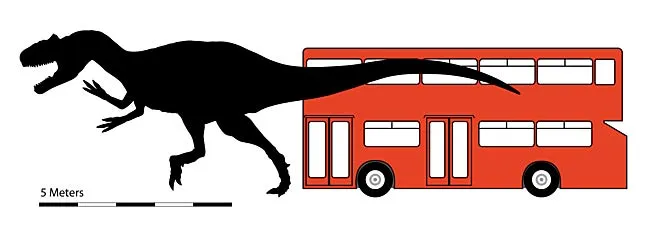
The upright-walking creature grinned with a mouth full of banana-sized teeth, stood taller than a double-decker bus and weighed more than two standard-sized cars.
Brusatte said evidence of the 95-million-year-old theropod has been extremely hard to come by.
"The first remains of Carcharodontosaurus were found in the 1920s, but they only consisted of two teeth which have since been lost," Brusatte said. "Other bits … were found in Egypt and described in the 1930s, but these were destroyed when Munich was bombed in 1944."
The new skull and neck fossils, described in the today's issue of the Journal of Vertebrate Paleontology, come from the Republic of Niger. Brusatte said the fact that they appeared significantly different to other remains found near Saharan Morocco warranted naming a new species.
"The Cretaceous world of 95 million years ago was a time of some of the highest sea levels and warmest climates in Earth history," Brusatte said. "It seems that shallow seas divided Morocco and Niger, promoting evolutionary separation of the species living in the two regions."
Get the world’s most fascinating discoveries delivered straight to your inbox.
He added that the evolutionary evidence may be old, but is entirely relevant to the contemporary era's global warming.
"This has implications for the world today in which temperatures and sea level are rising," he said. "By studying these sorts of ecosystems that we can hope to understand how our modern world may change."
C. iguidensis weighed in at 3.2 tons and extended more than 44 feet (14 meters), but was not the largest terrestrial meat-eating dinosaur ever discovered. That title belongs to Spinosaurus aegyptiacus—an 8-ton, 55-foot (17-meter) long behemoth with a sail-like back.
- Also Today: A New Antarctic Dinosaur
- Gallery: Dinosaur Fossils
- Dino Quiz: Test Your Smarts