













National Weather Service Boots New Supercomputer

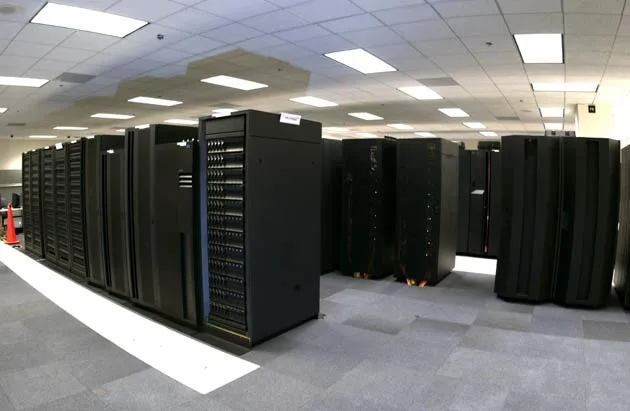
Your local weather forecast will now be generated in part by the world's 36th fastest computer.
The National Weather Service's parent agency, NOAA, announced today it turned on a new set of IBM machines that increase the computational power used for the nation's climate and weather forecasts by 320 percent.
The linked machines can process 14 trillion calculations per second and ingest more than 240 million global observations daily. New data from the Constellation Observing System for Meteorology, Ionosphere and Climate (COSMIC) satellites, launched last year, will feed into the computer to provide better understanding of the jet stream, along which many major winter storms track.
The idea is to deliver more weather products with greater accuracy and longer-lead times, the agency said in a statement.
"Better physics, better models, better data, and faster and more powerful supercomputing are the foundation for making better weather and climate forecasts," said retired Navy Vice Adm. Conrad C. Lautenbacher, NOAA administrator.
The supercomputer [image] and a backup unit will harness 160 IBM System p575 servers, with 16 1.9 gigahertz Power5+ processors. The machines also will contain 160 terabytes of IBM system storage DS4800 disk storage systems.
- The World's Weirdest Weather
- Weather 101: All About Wind and Rain
- How Weather Changed History
- All About Weather
Get the world’s most fascinating discoveries delivered straight to your inbox.
