













Huge Refrigerators Create Temps Colder than Space

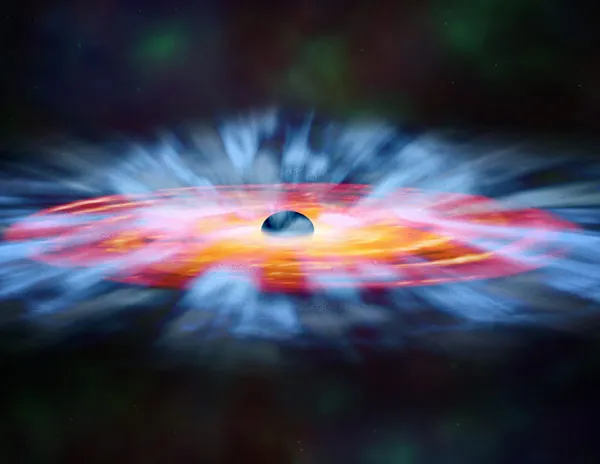
As the ambitious Large Hadron Collider (LHC) in Switzerland is put through its paces, one sector has been cooled to minus 455.8 degrees Fahrenheit, or -271 Celsius, colder than space.
The collider, designed to smash sub-atomic particles together and possibly create miniature black holes, will help scientists understand the mysterious realm of subatomic matter.
The frigid feat, along one stretch of the 16.8-mile-long (27 kilometers) superconductor ring, was announced today. It was accomplished using liquid helium as a refrigerant, because it is the only element that can exist in a liquid state at such a low temperature, the scientists said.
The freezing conditions are needed to allow a current to flow without resistance, creating a dense, powerful magnetic field. The magnets will guide two beams of protons around the track, so that a precision collision can be accomplished.
"This is the first major step in the technical validation of a full-scale portion of the LHC," explained LHC project leader Lyndon Evans.
The project was hit with a setback recently when one of the 43-foot-long magnets on the collider broke, and officials were forced to find a replacement.
The project is run by world's largest physics laboratory, CERN, near Geneva. Rumors have circulated the potential black hole factory could destroy Earth, but scientists say the off of that happening are "totally miniscule."
Get the world’s most fascinating discoveries delivered straight to your inbox.
- Top 10 Ways to Destroy Earth
- Natural Disasters: Top 10 U.S. Threats
- Myths and Urban Legends
