















Scientists Generate Electricity in Novel Way

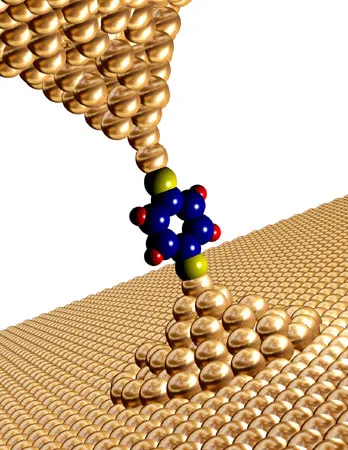
Researchers say they have successfully generated electricity from heat by trapping organic molecules between metal nanoparticles, a finding that could yield cheap refrigerators, not to mention new, more efficient energy sources in general.
Currently, about 90 percent of the world's electricity is generated by burning fossil fuels, which creates heat, often in the form of steam. The steam spins a turbine that drives a generator to produce electricity.
But this method is indirect, and in the process, plenty of heat is wasted and its energy goes uncaptured.
"Generating 1 watt of power requires about 3 watts of heat input and involves dumping into the environment the equivalent of about 2 watts of power in the form of heat," said lead author Arun Majumdar of the University of California at Berkeley.
For the past 50 years, scientists have been exploring ways to use this wasted heat.
"If even a fraction of the lost heat can be converted into electricity in a cost-effective manner," Majumdar said, "the impact it would have on energy can be enormous, amounting to massive savings of fuel and reductions in carbon dioxide emissions."
But the temperature at which that heat is released is too low to be used by traditional heat engines, so researchers have been developing thermoelectric converters to change the heat to electricity more directly.
Get the world’s most fascinating discoveries delivered straight to your inbox.
The converters operate based on a phenomenon called the Seebeck effect: When the junctions of two metals are kept at different temperatures, they respond differently to the temperature difference, and a voltage is generated.
But such converters are far less efficient than traditional heat engines and rely on rare, expensive metals and so are impractical for widespread use.
In the new study, Majumdar and his colleagues coated gold electrodes with three different organic molecules and were able to generate a voltage--the first time the Seebeck effect has been observed in organic molecules. Though the voltage was only seen across an individual molecule, the researchers will eventually work up to multiple junctions.
Widespread use of thermoelectric converters could be simpler and more efficient with organic materials because they are cheap, abundant and easily processed. (Though gold electrodes were used for this study, eventually iron or silicon electrodes will be used, according to the researchers.)
"The use of inexpensive organic molecules and metal nanoparticles offers the promise of low-cost, plastic-like power generators and refrigerators," Majumdar said.
The researchers caution that this is just the first step, but are optimistic about the technological potential.
"We are going down the road of cheap thermoelectric materials," said Majumdar's colleague Pramod Reddy. The research is detailed in the Feb. 15 issue of the online version of the journal Science.
- Power of the Future: 10 Ways to Run the 21st Century
- Scientists Turn Cow Waste into Electricity
- New Flexible Material Conducts Electricity
- All About Electricity

Andrea Thompson is an associate editor at Scientific American, where she covers sustainability, energy and the environment. Prior to that, she was a senior writer covering climate science at Climate Central and a reporter and editor at Live Science, where she primarily covered Earth science and the environment. She holds a graduate degree in science health and environmental reporting from New York University, as well as a bachelor of science and and masters of science in atmospheric chemistry from the Georgia Institute of Technology.