













Limit Found to Tree Height
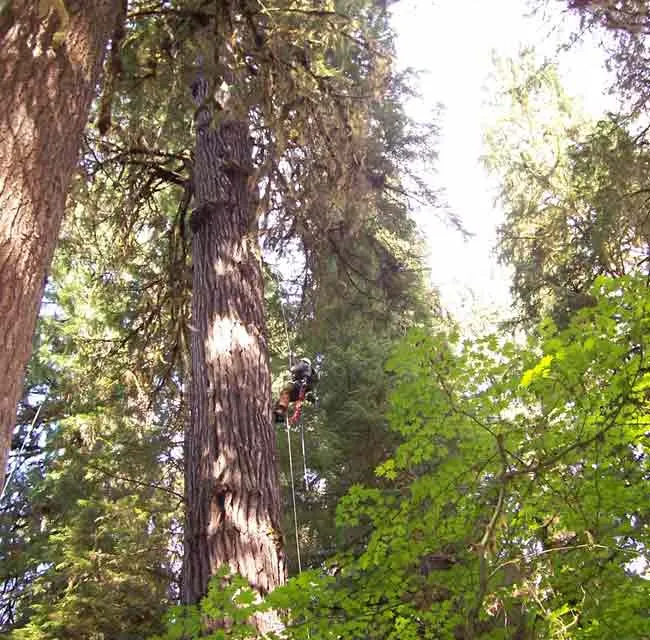
The Douglas fir has earned a towering reputation for its ability to soar higher than most trees. But there's a limit to how tall it can grow, and a new study explains why: If it grows too tall, a tree cannot transport water to the highest leaves.
This study showed that somewhere between the height of a 30- or 35-story building, Douglas firs can't transport water any higher. This predicted range corresponds with the world's tallest Douglas fir, standing in at 326 feet. (The world's tallest tree is a California redwood, which stands 379 feet.)
"As you go higher and higher in a Douglas fir tree, it's almost like experiencing a drought," said Rick Meinzer, a Forest Service scientist at the Pacific Northwest Research Station.
Evaporation of water from leaves sucks both water and air bubbles. In Douglas firs, this transport relies on dead cells that act like valves and make up most of this tree's wood and prevent air bubbles from traveling up through trees.
By rejecting the spread of air bubbles through these valves, this tree also prevents water from being pulled higher.
The findings, detailed this week in Proceedings of the National Academy of Sciences, were made by a team of scientists from Oregon State University and the U.S.D.A. Forest Service.
Get the world’s most fascinating discoveries delivered straight to your inbox.