Live Science Plus





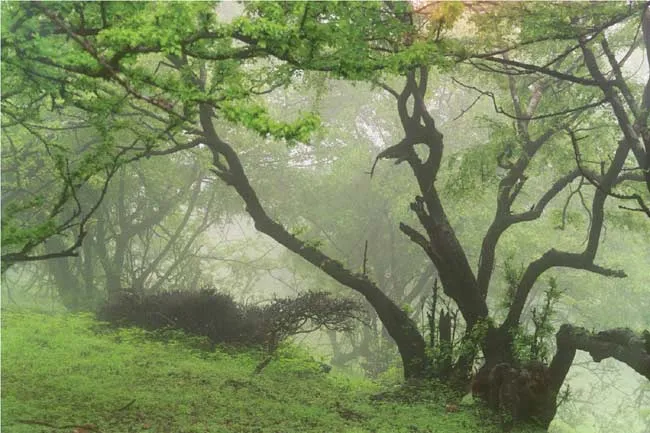
Trees in a rare cloud forest in the desert regions of Oman water themselves with seasonal fog, according to Massachusetts Institute of Technology scientists.
The researchers studied this unusual watering process in a forest located in the Dhofar Mountains in the south of the Middle Eastern country.
Clouds form in the forest when moist air flows in from over the Arabian Sea and pushes up against the mountains. Water droplets from the clouds collect on the trees' leaves then fall to the ground, where the water can be stored and used by the trees in drier weather.
Article continues belowThe process works in the same manner as fog getting your clothes wet, explained researcher Elfatih Eltahir.
This forest is odd because cloud forests typically form in moister climates where a forest can largely sustain itself without the lower-lying fog layer, since it gets plenty of rainfall from higher clouds. The Omani forest would not fair as well without its essential fog.
"If you don't have the additional water from the [low-level] clouds, you won't have the trees," Eltahir said.
Eltahir and his colleagues used rain gauges to measure rainfall above the trees and also a larger amount of precipitation beneath the trees, showing that the water droplets that form from the fog and drip to the ground are essential to the forest.
Eltahir and his fellow researchers are worried that over-grazing from goats and camels could damage the forest by decreasing the amount of water they get from the fog and making the trees less likely to grow back.
"If you destroy an ecosystem like that, it's hard for it to regenerate," Eltahir said.
The Omani government's Ministry of the Environment is also worried, according to Eltahir, who has been advising them on ways to replant and irrigate the forest to protect it.
- Gallery: Curious Clouds
- New Material Collects Water From Thin Air
- The Many Flavors of Fog
- All About Weather