















Super-Ant Taking Over Europe

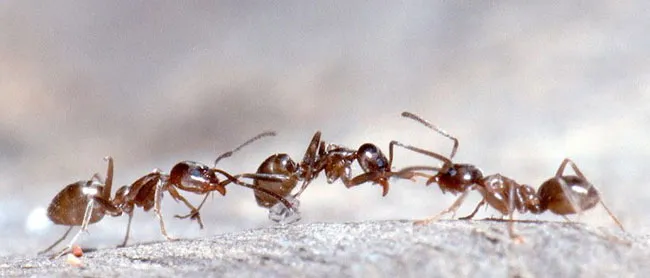
An ant species that originated in the Black Sea region has invaded more than 100 areas across Europe and is moving north. Scientists say if it is not stopped, it will reach northern Germany, Scandinavia and Britain and could invade the whole world.
The pest, called Lasius neglectus, destroys native ant species as it invades new territory. It has also invaded much of Asia.
This week in the journal PLoS ONE, scientists presented the first thorough study of the intruder, which was discovered in 1990 after moving into Hungary.
"Its rapid spread through Europe and Asia [is] the most recent example of a pest ant that may become a global problem," the scientists write.
Ants rule
Ants thrive all over the world because they are very adaptive. Urban ants, for example, have adapted to the extreme heat of city living. Scientists estimate there are about 20,000 different species globally. The combined weight of ants in the Brazilian Amazon is thought to be four times greater than the combined mass of all of the mammals, birds, reptiles and amphibians there.
When they arrive in new locations, ants can be extremely aggressive and very detrimental to local flora and fauna.
Get the world’s most fascinating discoveries delivered straight to your inbox.
For example, the non-native red fire ant causes about $750 million of damage in the United States every year, the authors of the new study point out. And the Argentine ant has spread along thousands of miles of coastline in southern Europe, exterminating the natural insect fauna. In California, the Argentine ant armies have nearly wiped out all native ants.
Unbelieveable numbers
L. neglectus resembles the common black garden ant, but its colonies involve up to 100 times more workers. It frequently settles in parks and gardens, the researchers say, and it quickly exterminates native ants.
"When I saw this ant for the first time, I simply could not believe there could be so many garden ants in the same lawn," said University of Copenhagen researcher Jacobus J. Boomsma, a co-discoverer of the ant.
L. neglectus live in networks of interconnected nests, with many queens that mate underground and don't fly.
So how do they spread across a continent? They infest potted plants, and humans carry them far and wide, the researchers said.
"The future will therefore see many more ants become invasive, so it is about time we understand their biology and this study is a major step in that direction," said Jes S. Pedersen, who coordinates the invasive ant program in Copenhagen.
- Gallery: Ants of the World
- Ants More Aggressive When in Gangs
- Why Ants Rule the World

Robert is an independent health and science journalist and writer based in Phoenix, Arizona. He is a former editor-in-chief of Live Science with over 20 years of experience as a reporter and editor. He has worked on websites such as Space.com and Tom's Guide, and is a contributor on Medium, covering how we age and how to optimize the mind and body through time. He has a journalism degree from Humboldt State University in California.