













Ants More Aggressive When in Gangs
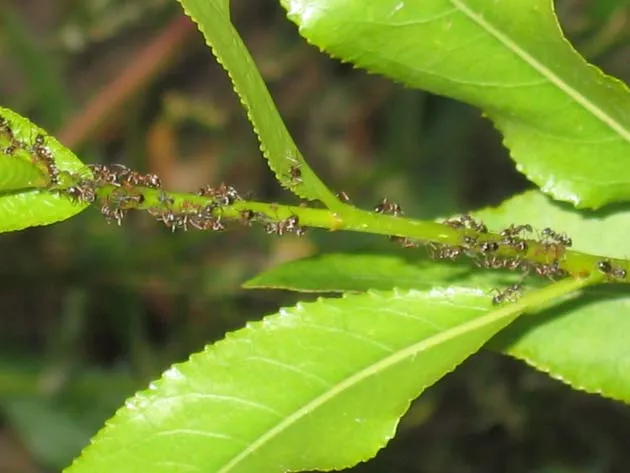
Whether in a bar or on the battlefield, it’s easier to fight knowing friends have your back. The same is true in the ant world.
A new study shows ants are more aggressive when they think they’re part of a larger group.
The research showed that ants fighting for a piece of tuna soaked in pineapple juice—a precious commodity for the invertebrates—acted more aggressively if they felt they were part of a community.
To foster feelings of kinship, researcher Colby Tanner, a graduate student at the University of Utah, kept one set of F. xerophila ants in a densely populated environment, where they were constantly bumping into each other. He put a second group of F. xerophila ants in a more sparsely populated area, where they had little contact with others.
Have at it
In fighting trials against their natural enemy, a different species of ant, the groups acted very differently.
While all the fights were evenly matched—either five-on-five or one-on-one—ants from the sparsely populated setting were more hesitant to scrap, Tanner found.
Get the world’s most fascinating discoveries delivered straight to your inbox.
On the other hand, ants raised in a highly populated environment were more aggressive in fights. Because F. xerophila ants are most successful when they gang up on opponents, Tanner thinks those that know they have allies are more willing to get involved.
The assertive behavior of ants used to being in large groups could also serve as a signal to opponents—a way for this species, which is not particularly adept at fighting alone, to indicate there are more of them around, he says.
Greater good
The signaling appears to work. When the F. xerophila ants acted belligerently, even in one-on-one situations, their opponents often ran away rather than sticking around for a fight they’d be favored to win.
Still, the confrontational approach didn’t always help ants individually. In fact, both groups of F. xerophila died at the same rate. The aggressive ones were more likely to kill their opponents, though, so the behavior served the larger community by keeping enemies away from limited resources.
The research was published online in the July 19 Proceedings of the Royal Society B: Biological Sciences.