















How Cockroaches Decide Where to Hang Out
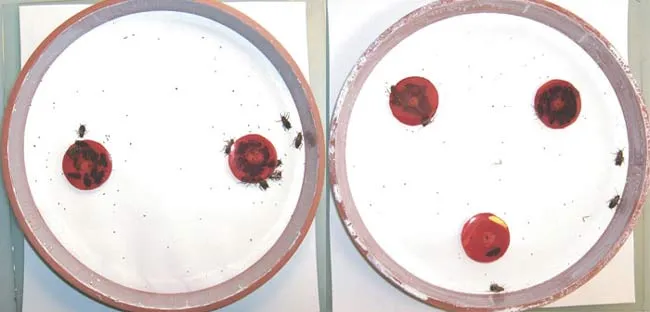
When it comes to making decisions, cockroaches take a Musketeer-like "all for one, and one for all" approach.
Researchers offered 50 cockroach larvae their choice of three shelters that could each house more than 50 cockroaches. All 50 tended to crowd into the same shelter.
When the shelters were swapped with smaller versions that could hold just 40 cockroaches, the group would typically split into two groups of about 25, leaving one house unoccupied. [Image]
"It's better, in terms of group benefits, to have a 50/50 split instead of one important, large group and one that's less robust," said study coauthor Jose Halloy of the Universite libre de Bruxelles in Belgium.
Group-living animals, such as flocks of birds, schools of fish, and colonies of ants, derive several benefits through this style of living. Cockroaches in particular enjoy increased reproductive success, they can share food resources, and they ward off desiccation by preserving humidity.
"If you think in terms of average individual benefit, it's better to be in groups with maximized size," Halloy told LiveScience. If the group must split up, it's better to split into equal-sized groups to maintain the largest average group size.
Interestingly, the group decides to divide without a leader telling everyone what to do. The decision is made collectively between individuals of equal status.
Get the world’s most fascinating discoveries delivered straight to your inbox.
"This social interaction between cockroaches is automatic in some sense," Halloy said.
The study is detailed in the March 27 online edition of the Proceedings of the National Academy of Sciences.
- Follow the Leader: Democracy in Herd Mentality
- Cockroach Love: A Secret That Could Finally Kill Them
- Roach Robot Feels Its Way Around
- How Ants Navigate