Live Science Plus


You are now subscribed
Your newsletter sign-up was successful
Want to add more newsletters?

Delivered Daily
Daily Newsletter
Sign up for the latest discoveries, groundbreaking research and fascinating breakthroughs that impact you and the wider world direct to your inbox.

Once a week
Life's Little Mysteries
Feed your curiosity with an exclusive mystery every week, solved with science and delivered direct to your inbox before it's seen anywhere else.

Once a week
How It Works
Sign up to our free science & technology newsletter for your weekly fix of fascinating articles, quick quizzes, amazing images, and more
Delivered daily
Space.com Newsletter
Breaking space news, the latest updates on rocket launches, skywatching events and more!
Once a month
Watch This Space
Sign up to our monthly entertainment newsletter to keep up with all our coverage of the latest sci-fi and space movies, tv shows, games and books.

Once a week
Night Sky This Week
Discover this week's must-see night sky events, moon phases, and stunning astrophotos. Sign up for our skywatching newsletter and explore the universe with us!
Join the club
Get full access to premium articles, exclusive features and a growing list of member rewards.
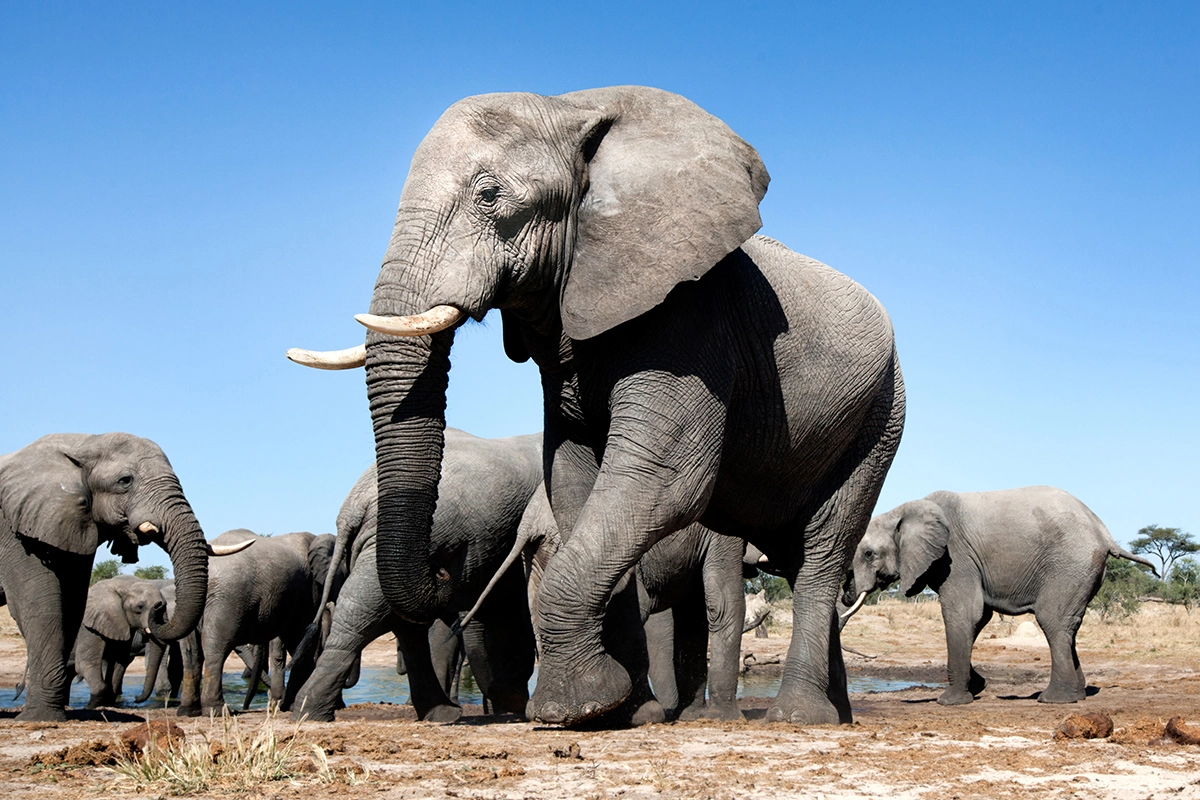
A professional big-game hunter died near Gwai, Zimbabwe, on the afternoon of May 19, after he was crushed by a female elephant that had been shot by a member of his hunting party.
Theunis Botha, a resident of Tzaneen, South Africa, was leading a group of hunters when they surprised a breeding herd of elephants and were charged by three females, according to the South African news site News24.
The incident took place at the Good Luck Ranch near Hwange National Park in northwest Zimbabwe, Simukai Nyasha, a spokesperson for the Zimbabwe Parks and Wildlife Management Authority, said in a statement.
Botha was well-known for safaris using dogs that were specially bred and trained to track and hunt animals such as leopards and lions, according to his website, Big Game Safaris. He began leading hunting expeditions in 1989 on his own property in South Africa, later offering his services for hunts on private ranches in Zimbabwe, Botswana, Mozambique and Namibia, Big Game Safaris reported in a biography of its founder.
Though wildlife trophy hunters typically confront large animals from a distance and with long-range rifles, that does not always protect them from being attacked by their prey. In 2013, a suspected poacher in Charara National Park, also in northwestern Zimbabwe, met a similar fate to Botha's when he was trampled by an elephant. His remains were found by rangers; two other poachers who entered the park with the man to illegally shoot elephants were arrested by authorities.
Zimbabwe is home to an estimated 80,000 elephants, the second largest population of elephants in Africa, officials reported in the Zimbabwe National Elephant Management Plan (2015 – 2020).
Original article on Live Science.