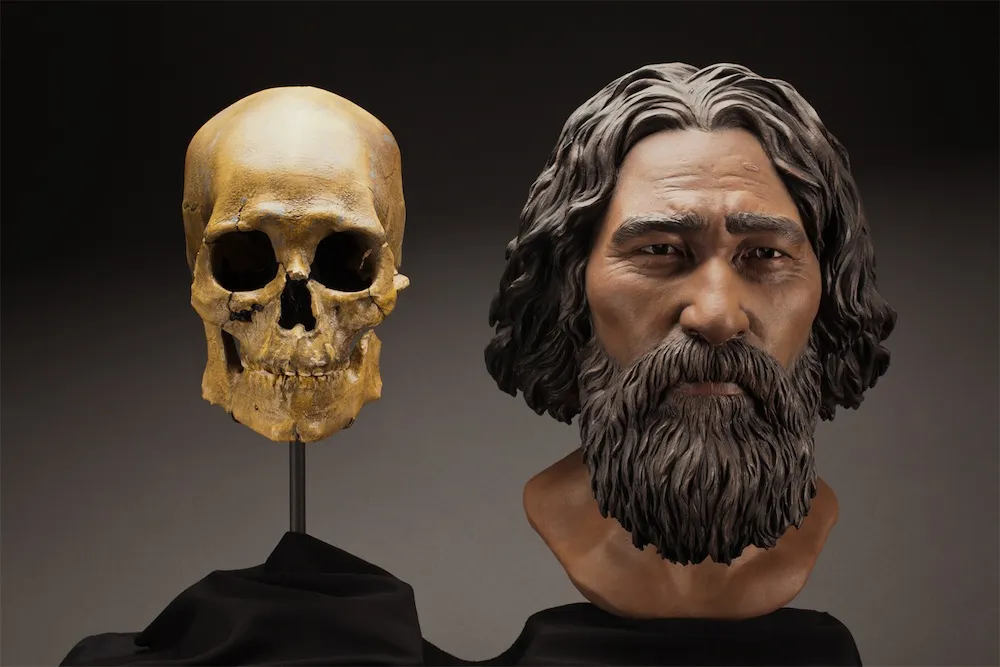
Thousands of years after his death, an ancient skeleton known as the Kennewick Man has finally been laid to rest.
On Friday (Feb. 17), the bones and belongings of the "Ancient One" were handed over to representatives of the Umatilla, Yakama Nation, Nez Perce Tribe, Confederated Tribes of the Colville Reservation and the Wanapum Band of Indians, the Seattle Times reported. The ancient remains were then placed in an undisclosed burial site near the Columbia River, which flows through parts of Washington and Oregon in the Pacific Northwest.
The burial officially ends a two-decades-long legal battle over the ancestry of the Kennewick Man, an 8,500-year-old skeleton that was unearthed on the banks of the Columbia River in Kennewick, Washington, in 1996. Native American tribes argued the man was an ancestor and therefore should be reburied according to their customs, while a handful of scientists over the years argued the man's ancestry was in doubt. [In Photos: Human Skeleton Sheds Light on First Americans]
Latest Videos From
"A wrong had finally been righted," Chuck Sams, communications director for the Confederated Tribes of the Umatilla Indian Reservation, told the Seattle Times.
After a bungled news conference shortly after the initial discovery of the Kennewick Man, rumors swirled that the man had European ancestry, and a team of anthropologists who did a facial reconstruction from his bones said he may have been of Polynesian ancestry. Later, a judge ruled that the man's ancestry was in doubt, preventing a proper Native American reburial.
In 2015, a study published in the journal Nature revealed that the man was unequivocally Native American, with closest genetic ties to the Colville people who live along the Northwest Coast and were one of the groups that claimed the Kennewick Man as an ancestor. A 2016 study by the Army Corps of Engineers confirmed this ancestry, paving the way for the Kennewick Man to be reburied under the guidelines of the Native American Graves Protection and Repatriation Act.
Originally published on Live Science.