















In Photos: Ancient Rock Art Found in Jordan's 'Black Desert'

A dry place

The Jebel Qurma area of Jordan’s Black Desert has little water, vegetation or wildlife. However, new archaeological finds indicate that around 2,000 years ago a large number of people inhabited this area and the climate was more hospitable.
[Read full story on Jordan's petroglyphs]
Hunting party

Thousands of inscriptions and petroglyphs (rock art) were found by archaeologists with the Jebel Qurma Archaeological Landscape Project. This petroglyph shows archers hunting gazelle. Many of the inscriptions are written in Safaitic, a writing system that was used in ancient times by people who lived in parts of Jordan, Syria and Arabia.
Horseback riding

This petroglyph shows a man riding a horse while armed with a lance.
Out for blood

Another hunting scene showing an archer shooting a lion. Notice the large birds – researchers believe that they may be ostriches.
[Read full story on Jordan's petroglyphs]
Secrets of the past

This petroglyph shows an archer shooting a large animal whose identity is uncertain. Modern day Jebel Qurma is not capable of sustaining horses, lions, ostriches, gazelles or a large human population. These petroglyphs and inscriptions, combined with botanical finds, indicate that the environment of Jebel Qurma was more hospitable 2,000 years ago then it is today.
Get the world’s most fascinating discoveries delivered straight to your inbox.
Religious overtones

Some of the petroglyphs are enigmatic and may provide information on the spiritual beliefs of the people who lived in the Jebel Qurma. Archaeologists have found a number of petroglyphs that contain images like the one seen here. Its meaning is elusive – some researchers interpret it as showing a woman with long hair.
Unknown inscription

Another enigmatic petroglyph. Analysis of the petroglyphs and inscriptions the archaeologists found is ongoing.
[Read full story on Jordan's petroglyphs]
Marking a grave
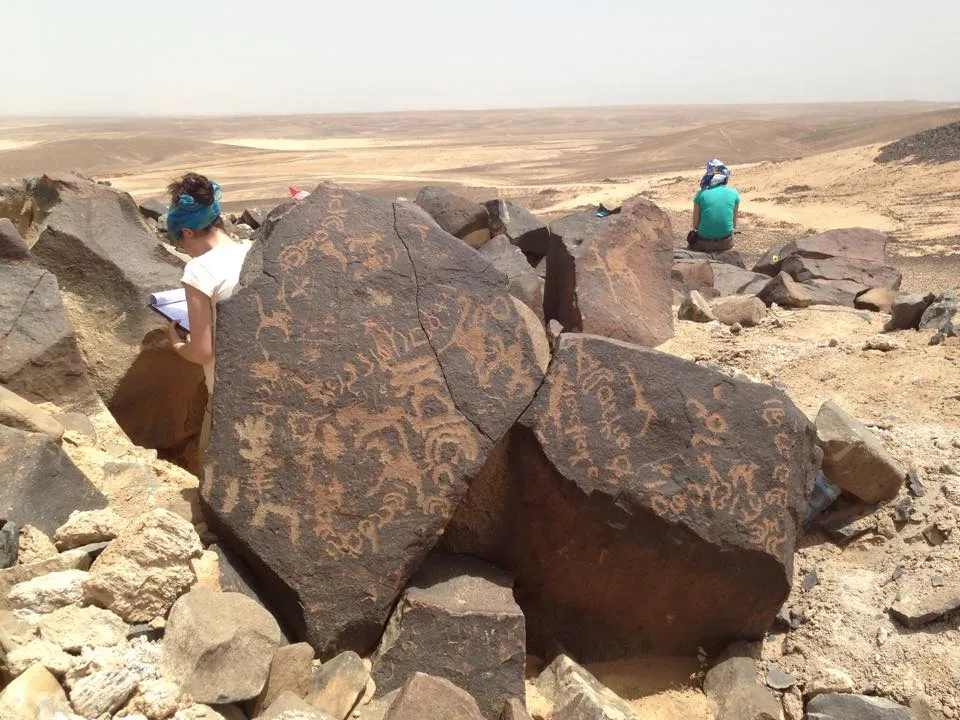
This cluster of about 100 petroglyphs was found by a burial. Archaeologists found that people often marked burials with piles of rocks called cairns.
Nomadic peoples

The remains of a sizable tomb. Modern day archaeologists call this a "tower tomb." In addition to inscriptions, petroglyphs and tombs archaeologists have also found the remains of camps and shelters in Jebel Qurma. They believe that the people who lived in Jebel Qurma around 2,000 years ago were nomadic.
More to learn

Another petroglyph and inscription dating back around 2,000 years. It shows a camel, a motif often seen in the Jebel Qurma petroglyphs. Research at Jebel Qurma is ongoing and more fieldwork will take place in the future.

Owen Jarus is a regular contributor to Live Science who writes about archaeology and humans' past. He has also written for The Independent (UK), The Canadian Press (CP) and The Associated Press (AP), among others. Owen has a bachelor of arts degree from the University of Toronto and a journalism degree from Ryerson University.