 Live Science Plus





You are now subscribed
Your newsletter sign-up was successful
Want to add more newsletters?

Delivered Daily
Daily Newsletter
Sign up for the latest discoveries, groundbreaking research and fascinating breakthroughs that impact you and the wider world direct to your inbox.

Once a week
Life's Little Mysteries
Feed your curiosity with an exclusive mystery every week, solved with science and delivered direct to your inbox before it's seen anywhere else.

Once a week
How It Works
Sign up to our free science & technology newsletter for your weekly fix of fascinating articles, quick quizzes, amazing images, and more

Delivered daily
Space.com Newsletter
Breaking space news, the latest updates on rocket launches, skywatching events and more!

Once a month
Watch This Space
Sign up to our monthly entertainment newsletter to keep up with all our coverage of the latest sci-fi and space movies, tv shows, games and books.

Once a week
Night Sky This Week
Discover this week's must-see night sky events, moon phases, and stunning astrophotos. Sign up for our skywatching newsletter and explore the universe with us!
Join the club
Get full access to premium articles, exclusive features and a growing list of member rewards.
500-Year-Old Shipwreck
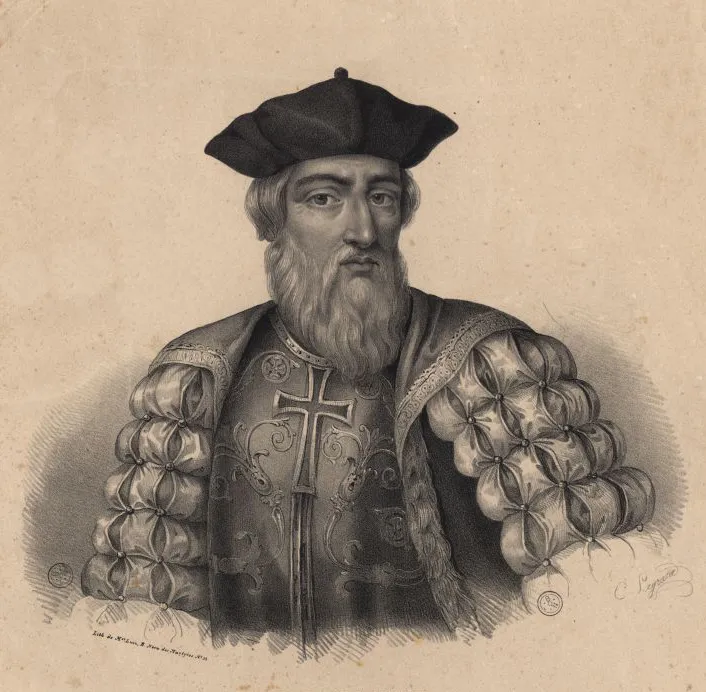
Marine archaeologists say they’ve located the wreck of the nau Esmeralda, a Portuguese ship that was part of explorer Vasco da Gama's second voyage to India (the explorer is pictured here). More than 500 years ago, the ship was destroyed in a storm, killing the crew and the commander, da Gama's uncle, Vicente Sodré.
Doomed Ship

Vasco da Gama's uncle, Vicente Sodré, ignored advice from the locals about impending strong winds. His ship, which was part of five-vessel squadron, became unmoored and sank in a bay, on an island off the coast of present-day Oman.
The Search Begins

In 1998, shipwreck hunter David Mearns went looking for the wreck around Ghubbat ar Rahib bay, off the northeastern coast of Al Hallaniyah island in Oman (shown here), and found several cannonballs on the seabed.
Underwater Excavations

More than a decade after Mearns’ first exploration, more thorough archaeological investigations began at the underwater site in 2013.
Sunken Treasures Found

The team turned up hundreds of artifacts that hint that they’ve found the lost Portuguese ship. Shown here is a copper alloy disk, marked with the Portuguese royal coat of arms.
Cannonballs from the Seabed

Geological analyses of stone shot found at the shipwreck showed that many were made of limestone one would expect to find in the Lisbon region of Portugal.
A Legendary Rare Coin

This CT scan shows the índio, an extremely rare Portuguese coin that was commissioned by King Dom Manuel in 1499 for trade with India. Mearns called it a "remarkable discovery."
Bronze Bell

Until it was raised by marine archaeologists, this ship's bell had been hidden beneath an underwater boulder for centuries.

