 Live Science Plus





You are now subscribed
Your newsletter sign-up was successful
Want to add more newsletters?

Delivered Daily
Daily Newsletter
Sign up for the latest discoveries, groundbreaking research and fascinating breakthroughs that impact you and the wider world direct to your inbox.

Once a week
Life's Little Mysteries
Feed your curiosity with an exclusive mystery every week, solved with science and delivered direct to your inbox before it's seen anywhere else.
Once a week
How It Works
Sign up to our free science & technology newsletter for your weekly fix of fascinating articles, quick quizzes, amazing images, and more

Delivered daily
Space.com Newsletter
Breaking space news, the latest updates on rocket launches, skywatching events and more!

Once a month
Watch This Space
Sign up to our monthly entertainment newsletter to keep up with all our coverage of the latest sci-fi and space movies, tv shows, games and books.

Once a week
Night Sky This Week
Discover this week's must-see night sky events, moon phases, and stunning astrophotos. Sign up for our skywatching newsletter and explore the universe with us!
Join the club
Get full access to premium articles, exclusive features and a growing list of member rewards.
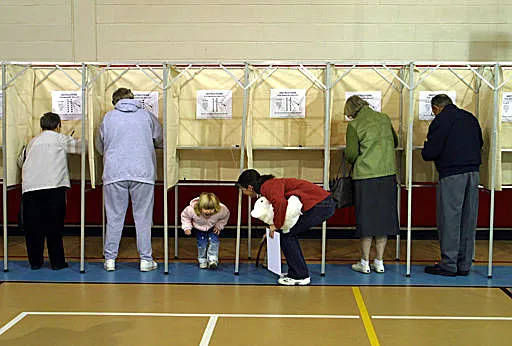
Voting could be in your genes, according to a study of twins.
The results, detailed in the May issue of the journal American Political Science Review, suggest that contrary to conventional wisdom, family upbringing has little or no effect on a child's future political involvement. Political scientist James Fowler of UC San Diego and his colleagues analyzed voting patterns of identical and non-identical twins from a sample in Los Angeles County and the National Longitudinal Study of Adolescent Health.
The L.A. data included voter information for eight elections between 2000 and 2005, including three primary, two statewide and three general elections. Fifty-three percent of the differences in voter participation in LA statistically could be explained by genetics.
Similar results were found for the nationally representative adolescent health study conducted from 2001 to 2002. In addition, the genetic-based differences extended to various types of political participation, including donating to a campaign, contacting an official, running for office and attending a rally.
"We expected to find that genes played some role in political behavior," Fowler said, "but we were quite surprised by the size of the effect and how widely it applies to all kinds of participation."
Like most human behaviors, whether or not a person votes has been a tough nut to crack. Past research has attributed a series of factors, such as socioeconomic status and even personality types, as partly responsible for vote-or-not behaviors. Recently, religious beliefs were added to the list.
Next, Fowler's team hopes to figure out why genes are tied to voter turnout.
Funding for the research came from the Institute of Government Affairs at UC Davis.
- Quiz: Bizarre U.S. Presidential Elections
- Humans: The Strangest Species
- Top 10 Mysteries of the Mind
