 Live Science Plus





You are now subscribed
Your newsletter sign-up was successful
Want to add more newsletters?

Delivered Daily
Daily Newsletter
Sign up for the latest discoveries, groundbreaking research and fascinating breakthroughs that impact you and the wider world direct to your inbox.
Once a week
Life's Little Mysteries
Feed your curiosity with an exclusive mystery every week, solved with science and delivered direct to your inbox before it's seen anywhere else.

Once a week
How It Works
Sign up to our free science & technology newsletter for your weekly fix of fascinating articles, quick quizzes, amazing images, and more
Delivered daily
Space.com Newsletter
Breaking space news, the latest updates on rocket launches, skywatching events and more!

Once a month
Watch This Space
Sign up to our monthly entertainment newsletter to keep up with all our coverage of the latest sci-fi and space movies, tv shows, games and books.

Once a week
Night Sky This Week
Discover this week's must-see night sky events, moon phases, and stunning astrophotos. Sign up for our skywatching newsletter and explore the universe with us!
Join the club
Get full access to premium articles, exclusive features and a growing list of member rewards.
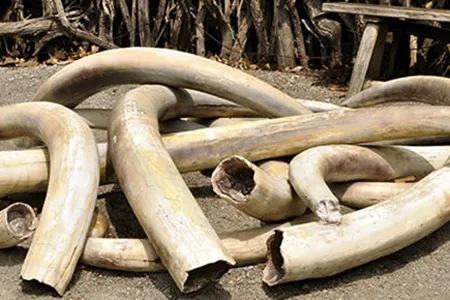
In a bid to discourage poachers and wildlife traffickers, federal officials had planned to pulverize 6 tons (5.4 tonnes) of illegal elephant ivory this week, but the event has been canceled due to the lapse in government funding.
After the shutdown began on Oct. 1, the U.S. Fish and Wildlife Service (FWS) suspended most of its programs and operations, including the ivory crush scheduled for Tuesday (Oct. 8) at the Rocky Mountain Arsenal National Wildlife Refuge in Commerce City, Colo., just north of Denver.
The agency was slated to destroy the United States' government-held stockpile of ivory that it has compiled over the past 25 years. The move was part of an executive order to fight wildlife trafficking that President Barack Obama signed in July. The initiative called for a new task force to address the issue and allotted $10 million to aid Africa's efforts to combat poaching and the illegal trade of wildlife, which has imperiled rhinoceroses, elephants and great apes. [Black Market Horns: Images from a Rhino Bust]
The Colorado ivory crush will be rescheduled, but a spokesman said the agency will not be able to make a decision about when until the Fish and Wildlife Service resumes normal operations. The agency has yet to determine what it will do with the crushed ivory.
The public destruction of the trinkets, figurines, statues and other goods is meant to send a message that ivory is not a legitimate commercial product to be bought and sold or used in art and jewelry.
"If we're going to solve this crisis we have to crush the demand, driven by organized crime syndicates who are robbing the world of elephants and stealing the natural heritage of African nations," Carter Roberts, president and CEO of World Wildlife Fund, said in a statement in September when the Colorado event was announced. "It's a global phenomenon. So we hope this encourages other governments to take bold, decisive steps to curb the demand for illegal elephant products."
The international ivory trade was banned in 1989 under the Convention on International Trade in Endangered Species of Wild Fauna and Flora (CITES). But a CITES report published last year found that elephant poaching has been on the rise and in 2012 it was at its worst in a decade. According to some estimates, at least 25,000 elephants were killed in Africa last year.
Traffickers sometimes go to great lengths to circumvent the law and sell ivory on lucrative global markets. Last year in Chinese-ruled Macau, customs officials discovered chocolate-coated ivory hidden in suspiciously heavy candy boxes.
Follow Megan Gannon on Twitter and Google+. Follow us @livescience, Facebook & Google+. Original article on LiveScience.

