Live Science Plus





You are now subscribed
Your newsletter sign-up was successful
Want to add more newsletters?

Delivered Daily
Daily Newsletter
Sign up for the latest discoveries, groundbreaking research and fascinating breakthroughs that impact you and the wider world direct to your inbox.

Once a week
Life's Little Mysteries
Feed your curiosity with an exclusive mystery every week, solved with science and delivered direct to your inbox before it's seen anywhere else.

Once a week
How It Works
Sign up to our free science & technology newsletter for your weekly fix of fascinating articles, quick quizzes, amazing images, and more

Delivered daily
Space.com Newsletter
Breaking space news, the latest updates on rocket launches, skywatching events and more!

Once a month
Watch This Space
Sign up to our monthly entertainment newsletter to keep up with all our coverage of the latest sci-fi and space movies, tv shows, games and books.

Once a week
Night Sky This Week
Discover this week's must-see night sky events, moon phases, and stunning astrophotos. Sign up for our skywatching newsletter and explore the universe with us!
Join the club
Get full access to premium articles, exclusive features and a growing list of member rewards.
The longest-living bat species may owe its exceptional life span, at least in part, to its genes, a new study suggests.
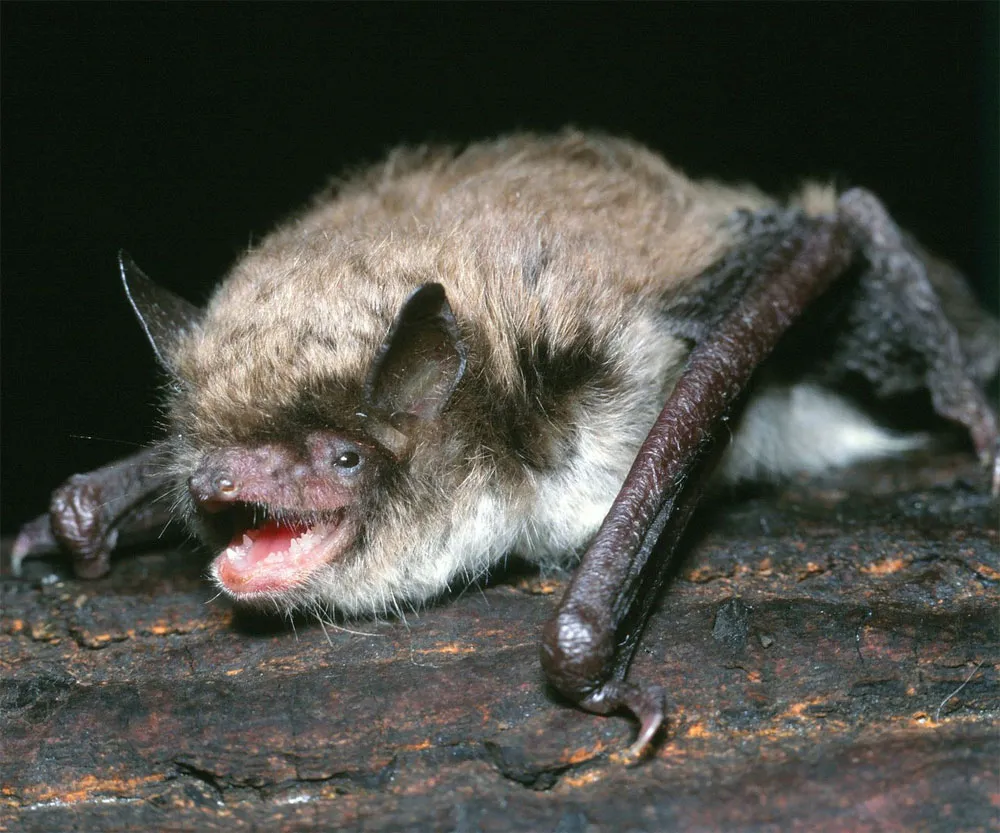
The study researchers analyzed the genome of the Brandt's bat, a species of vesper bat that can live to be at least 41 years old.
Although life span is typically linked with physical size — with bigger animals usually living longer — bats are an exception to this rule. In fact, Brandt's bats, which weigh about 4 to 8 grams (0.14 to 0.28 ounces), have the longest life span for their body size, the researchers said. [See Extending Life: 7 Ways to Live Past 100].
Genome sequencing revealed that Brandt's bats have about 22,000 genes, which is about the same number of genes other mammals have.
Genes for two proteins involved in growth — called growth hormone receptor (GHR) and insulinlike growth factor 1 receptor (IGF1R) — showed changes that also appear among other long-lived bat species. Previous studies in mice and other animals suggest genetic changes in GHR and IGF1R are linked with longevity. For instance, mice with mutations in GHR live twice as long as normal mice,said study researcher Vadim Gladyshev, a geneticist at Brigham and Women's Hospital in Boston.
These same genetic changes also may be responsible for the bats' small size: Mutations in GHR in mice and humans result in dwarfism, the researchers said.
"We think the bat's life span is, in part, an untended consequence of its small body size," Gladyshev told LiveScience.
Brandt's bats also hibernate and roost in caves — behaviors that may help them avoid predators and extreme weather conditions, and contribute to their longer life span, the researchers said. The Brandt's bat also takes a relatively long time to reach maturity, and it does not produce many offspring — two characteristics seen in larger, longer-living mammals.
The Brandt's bat also had specific genetic adaptations for hibernation, echolocation and vision, the study researchers found.
Ultimately, studying long-lived mammals can help researchers understand the genetic basis of longevity in different species, Gladyshev said.
The researchers have sequenced the genomes of other animals that are long-lived for their size, such as the naked mole rat. "Interestingly, several adaptations that contribute to longevity of these species seem to be different, suggesting that there are many routes to a long life span," Gladyshev said..
The study is detailed today (Aug. 20) in the journal Nature Communications.
Follow Rachael Rettner @RachaelRettner. Follow LiveScience @livescience, Facebook & Google+. Original article on LiveScience.