 Live Science Plus





You are now subscribed
Your newsletter sign-up was successful
Want to add more newsletters?

Delivered Daily
Daily Newsletter
Sign up for the latest discoveries, groundbreaking research and fascinating breakthroughs that impact you and the wider world direct to your inbox.

Once a week
Life's Little Mysteries
Feed your curiosity with an exclusive mystery every week, solved with science and delivered direct to your inbox before it's seen anywhere else.

Once a week
How It Works
Sign up to our free science & technology newsletter for your weekly fix of fascinating articles, quick quizzes, amazing images, and more

Delivered daily
Space.com Newsletter
Breaking space news, the latest updates on rocket launches, skywatching events and more!

Once a month
Watch This Space
Sign up to our monthly entertainment newsletter to keep up with all our coverage of the latest sci-fi and space movies, tv shows, games and books.

Once a week
Night Sky This Week
Discover this week's must-see night sky events, moon phases, and stunning astrophotos. Sign up for our skywatching newsletter and explore the universe with us!
Join the club
Get full access to premium articles, exclusive features and a growing list of member rewards.
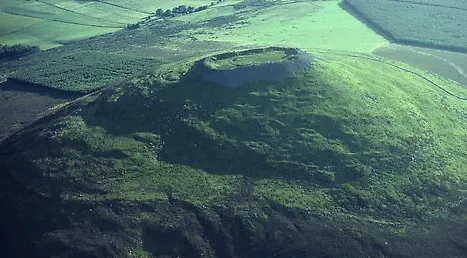
British researchers are soliciting help from citizen scientists to gather information on some 5,000 Iron Age hillforts that dot the United Kingdom and Ireland.
The aim is to make an online public database of these ubiquitous but understudied prehistoric monuments, the researchers say. The team is hoping to flesh out a picture of regional hillfort fashions and to get a better idea of how these structures were used.
Starting Monday (July 8), citizens can submit information about their local hillforts on the project website. The researchers are looking for details like the style and number of ramparts, ditches or entrances. And they aren't just interested in well-preserved Iron Age forts; the project leaders are also seeking data on sites where crop marks are the only traces left. [In Photos: Amazing Ruins of the Ancient World]
Eventually, the database dubbed "An Atlas of Hillforts in Britain and Ireland" will be searchable by region and by characteristics. It will also be linked to Google Earth/Maps so that each fort can be studied in the context of its landscape, the researchers say.
"There is huge variety in where the hillforts were sited and the materials used to construct them," Gary Lock, emeritus professor of archaeology at the University of Oxford and co-director of the project, said in a statement.
"Hillforts in the upland areas are often stone-built, while those in lowland areas are often made of timber and earth," Lock added. "Some were constructed in prominent positions on the very top of hills, while others were on slopes or not even on hills at all. We want to shed new light on why they were created and how they were used."
Another co-director, Ian Ralston, of the University of Edinburgh, said they hope the project will lead to discoveries of new archaeological sites and new information about ones that are already known.
"We expect the results of this project to change our vision of these iconic monuments," Ralston said in a statement.
For all their prominence, hillforts have not been the subject of much academic research, the project leaders say. Most were built after about 700 B.C. and used until the Romans arrived in the middle of the first century A.D. But others were constructed even earlier and enjoyed use after Roman occupation in some parts of Britain and Ireland.
Researchers also believe that hillforts were not military strongholds, but rather settlements occupied for short periods or meeting places for religious activities and festivals, and market days. The forts vary widely in style and size. Some in Argyll and west Wales cover less than 2.5 acres (1 hectare), while others like Ham Hill in Somerset enclose areas as big as 200 acres (80 hectares).
Follow Megan Gannon on Twitter and Google+. Follow us @livescience, Facebook & Google+. Original article on LiveScience.com.

